Top Rated After-School Pottery and Clay Clubs for Children in the UK
Top Rated After-School Pottery and Clay Clubs for Children in the UK
After-school pottery and clay clubs can be a brilliant way for children in the UK to unwind after school, build confidence, and develop fine motor skills and creativity. But quality varies hugely between providers, and it can be hard to know which clubs are safe, well-run and genuinely educational.
This guide is written for UK parents who want practical, detailed advice on how to choose the best pottery or clay club for their child – whether that’s in a primary school hall in Croydon, a community arts centre in Leeds, or a specialist ceramics studio in Bristol.
We’ll look at:
- What a high-quality pottery or clay club should offer
- Safeguarding, Ofsted and legal requirements
- Staff qualifications and experience to look for
- Typical UK costs and hidden extras
- How pottery supports confidence, wellbeing and social skills
- SEND inclusion and accessibility
- Key red flags and how to spot poor providers
- Questions to ask on a visit
- Practical checklists you can use immediately
1. Why Choose a Pottery or Clay Club After School?
Pottery and clay work are more than just “messy play”. A well-run club can support your child’s development in several important ways.
1.1 Developmental benefits
Fine motor skills and coordination
Working with clay strengthens hand muscles, improves grip and supports handwriting. Rolling, pinching, smoothing and cutting clay all build dexterity.
Sensory regulation
Clay is naturally calming for many children. The pressure and resistance can help children who are:
- Wound up after a busy school day
- Anxious or overwhelmed by noise and crowds
- Neurodivergent and benefit from deep pressure or tactile input
Creativity and problem-solving
Children learn to:
- Plan a design (e.g. a mug, animal, or tile)
- Work out how to make it stand up or stay together
- Adapt when something collapses or cracks
Perseverance and resilience
Clay projects often take more than one session (build, dry, fire, glaze). Children learn to:
- Wait for results
- Cope when pieces break or don’t turn out as expected
- Try again with new techniques
1.2 Emotional and social benefits
Confidence and pride
There is something powerful about holding a solid, finished object you made yourself. For children who struggle academically or in sport, pottery can be a place where they finally feel, “I’m good at this.”
Stress relief
Many UK parents report that their child is calmer and more settled after a clay session than after screen-based clubs. The repetitive, hands-on nature of clay work can be grounding.
Social skills
In a good club, children:
- Share tools and space
- Learn to wait their turn at the sink or kiln
- Give and receive feedback kindly (“I like how you did the pattern on that”)
- Work on group projects (e.g. a class mural or totem pole)
1.3 Practical benefits for families
- Reliable childcare after school, often on-site at your child’s school
- Screen-free time in a structured, supervised setting
- Portfolio building for secondary school art scholarships or GCSE Art later on
2. Types of Pottery and Clay Clubs in the UK
You’ll find a range of providers across the UK, from small independent artists to national organisations.
2.1 School-based after-school clubs
These are usually:
- Run in the school art room, hall or a spare classroom
- Operated either by the school itself or by an external provider
- Convenient for working parents as children go straight from class to club
Pros:
- Familiar environment for children
- Often cheaper than external studios
- Staff may already know the children and school routines
Cons:
- Limited access to a kiln (may rely on air-dry clay)
- Space and storage constraints
- Quality can vary depending on who runs it
2.2 Community arts centres and studios
These might be:
- Local council arts centres
- Independent ceramics studios
- Charities or CICs (Community Interest Companies)
Pros:
- Often have full pottery facilities (kilns, wheels, glazes)
- Specialist tutors with ceramics backgrounds
- Richer range of techniques and materials
Cons:
- Travel required after school
- May be more expensive
- Sessions may start later, requiring a gap between school and club
2.3 Franchise or national providers
Some UK-wide or regional organisations run pottery or clay-based clubs in multiple schools or venues.
Pros:
- Standardised policies and training
- Clear safeguarding frameworks
- Easier to check reviews across multiple locations
Cons:
- Quality can still vary by local staff
- Less flexibility in adapting to individual school needs
2.4 One-off workshops vs ongoing clubs
- One-off workshops: Good for trying pottery before committing; less continuity.
- Termly clubs: Better for skill progression and building relationships.
For long-term development, a termly or year-long club is usually more beneficial than ad-hoc sessions.
3. What a High-Quality Pottery or Clay Club Should Offer
When you visit or research a club, look for the following core features.
3.1 Clear structure and progression
A strong club will have:
- A planned programme for the term (e.g. pinch pots, coil pots, slab building, simple sculpture)
- Age-appropriate projects (simpler for KS1, more complex for KS2/KS3)
- Opportunities to revisit and build on skills
Ask if they can show you:
- A sample term plan
- Photos of previous projects (without children in them)
- Examples of work from different age groups
3.2 Safe, suitable materials
Look for:
- Non-toxic, child-safe clays and glazes
- Clear rules about not putting clay or tools in mouths
- Proper ventilation if using glazes or underglazes
- Age-appropriate tools (no sharp blades for younger children)
For school-based clubs, check that the provider follows the school’s health and safety policy and has their own risk assessments.
3.3 Balance of instruction and creativity
High-quality clubs:
- Demonstrate techniques clearly (e.g. how to join clay properly)
- Offer choice within a theme (e.g. “We’re making animals today, but you choose which animal”)
- Avoid overly “template” projects where every child’s work looks identical
You want a club where your child learns real skills and has space to express their own ideas.
3.4 Display and celebration of work
Look for:
- Finished pieces being sent home regularly
- Occasional displays in school corridors or local libraries
- End-of-term mini-exhibitions for families (even if just photos)
This builds children’s pride and helps you see what they’re actually doing.
4. Safeguarding, Ofsted and Legal Requirements
Many parents worry about safety and safeguarding, especially when clubs are run by external providers. Here’s what you need to know in a UK context.
4.1 Ofsted registration – when it applies
After-school clubs may need to be Ofsted-registered, depending on:
- The age of children
- The length and frequency of sessions
- Whether the club is mainly childcare or mainly an activity
Common scenarios:
- On-site school clubs run directly by the school: usually covered under the school’s existing Ofsted registration.
- External providers in schools: may operate under the school’s umbrella or have their own registration, depending on the arrangement.
- Studio-based clubs: often classed as “activity-based” and may not require Ofsted registration if parents remain responsible for drop-off/collection and it’s not primarily childcare.
If a provider claims to be Ofsted-registered, you can:
- Ask for their Ofsted URN (Unique Reference Number)
- Check them on the Ofsted website
4.2 DBS checks and safer recruitment
Regardless of Ofsted status, you should expect:
- Enhanced DBS checks for all staff working directly with children
- At least one person with recent safeguarding training (ideally Designated Safeguarding Lead trained)
- A clear safer recruitment process (references, identity checks)
Ask directly:
- “Do all staff working with the children have enhanced DBS checks?”
- “Who is your Designated Safeguarding Lead and how can they be contacted?”
4.3 Safeguarding policies
A reputable club will have a written safeguarding policy that covers:
- How they respond to concerns about a child
- How they manage allegations against staff
- How they share information with schools and parents
They should be willing to share this policy or at least summarise it clearly.
4.4 Ratios and supervision
While exact ratios vary, as a guide for after-school pottery clubs in the UK:
- Ages 5–7 (KS1): ideally 1 adult to 8–10 children
- Ages 7–11 (KS2): ideally 1 adult to 10–12 children
- Mixed ages or SEND-heavy groups: ratios should be lower
Because pottery involves tools, water and sometimes kilns, you should be wary of:
- One adult supervising more than 12–15 children alone
- No clear system for toilet breaks and movement in and out of the room
4.5 Insurance and risk assessments
Ask about:
- Public liability insurance (standard for any provider)
- Employer’s liability insurance if they have staff
- Risk assessments for:
- Use of clay and glazes
- Use of kilns (if on-site)
- Cleaning and slip hazards
A serious provider will have these documents and be comfortable explaining them.
5. Staff Qualifications and Experience: What to Look For
Not every excellent pottery tutor will have a formal teaching qualification, but you should expect relevant expertise and child-focused experience.
5.1 Artistic and technical background
Look for at least one of:
- Degree or diploma in Ceramics, Fine Art, 3D Design or similar
- Significant professional experience as a potter or ceramic artist
- Evidence of ongoing practice (e.g. studio work, exhibitions, commissions)
Ask:
- “Who designs the projects and what is their ceramics background?”
- “How do you keep your own skills up to date?”
5.2 Experience with children
Equally important is experience working with children in UK settings:
- Teaching assistant or teacher experience
- Youth work or community arts projects
- Previous after-school or holiday club work
For primary-aged children, you want staff who understand:
- Behaviour management in groups
- Age-appropriate expectations
- How to differentiate tasks for different abilities
5.3 Training and CPD
Ask if staff have training in:
- Safeguarding (ideally updated every 2–3 years)
- First aid, especially paediatric first aid if working with under-8s
- Health and safety in art/DT environments
In some boroughs, local authorities or arts councils offer training for community arts providers. It’s a good sign if staff engage with this.
5.4 Leadership and consistency
A high-quality club will have:
- A named lead tutor who is present most weeks
- Clear cover arrangements when staff are absent
- Low staff turnover where possible
If staff change constantly, it can affect children’s sense of safety and continuity.
6. Typical UK Costs and Hidden Fees
Costs vary widely across the UK, depending on location, facilities and staffing.
6.1 Typical price ranges (as of mid-2020s)
These are approximate figures for a 60–90 minute after-school pottery or clay club:
- School-based club (London & South East): £8–£15 per session
- School-based club (rest of England, Wales): £6–£12 per session
- Studio-based club (London & major cities): £12–£25 per session
- Studio-based club (smaller towns): £8–£18 per session
Many providers charge per term (e.g. 10–12 weeks) and expect full-term payment upfront.
6.2 What should be included in the fee?
Ideally, the fee should cover:
- All clay and basic materials
- Use of tools and equipment
- Firing in the kiln (if used)
- Basic glazes or paints
- Staff time and supervision
6.3 Common hidden or extra costs
Ask specifically about:
- Firing fees: Some studios charge extra per piece or per kilo of clay.
- Glaze upgrades: Extra charge for certain glazes or finishes.
- Replacement fees: If a piece breaks in the kiln, do they charge to remake/refire?
- Late collection fees: Often charged in 5 or 10-minute blocks.
- Registration or membership fees: Some studios or clubs add an annual fee.
Clarify:
- “Is the price all-inclusive, or are there any extra costs for firing or materials?”
- “What happens if my child misses a session – do you offer catch-ups or refunds?”
6.4 Discounts and funding
You may find:
- Sibling discounts (e.g. 10% off for second child)
- Early-bird discounts for booking a full term
- Pupil Premium or hardship support in some schools
- Local council or charity-funded places in areas of higher deprivation
If cost is a barrier, it’s worth asking discreetly if there are subsidised places or payment plans.
7. How Pottery Clubs Build Confidence and Social Skills
Many parents choose pottery not just for the art, but for the emotional and social benefits.
7.1 Confidence through mastery
Children gain confidence when they:
- Learn a new technique (e.g. making a coil pot that doesn’t collapse)
- See visible improvement over a term
- Receive specific, genuine praise (e.g. “You’ve really improved how you smooth your joins”)
A good tutor will:
- Break tasks into manageable steps
- Normalise mistakes (“Clay is very forgiving – we can squash it and start again”)
- Encourage children to compare their work to their own past efforts, not to others’
7.2 Social interaction in a low-pressure setting
Pottery clubs can be especially helpful for children who:
- Find team sports stressful
- Are shy in large groups
- Struggle with unstructured playground time
The focus on hands-on activity means:
- Less pressure for constant conversation
- Natural opportunities for small talk (“What are you making?”)
- Shared problem-solving (e.g. helping each other fix cracks)
7.3 Emotional regulation and wellbeing
Clay work can support:
- Mindfulness: focusing on texture, pressure and movement
- Expression: creating objects that reflect feelings or interests
- Coping skills: learning to manage frustration when things go wrong
Ask potential clubs how they support:
- Children who get upset if their work breaks
- Perfectionist children who fear making mistakes
- Children who are anxious about mess or getting dirty
8. SEND Inclusion and Accessibility
Many children with SEND (Special Educational Needs and Disabilities) thrive in pottery and clay clubs, but inclusion is not automatic. You’ll need to check how well a provider can meet your child’s specific needs.
8.1 Physical accessibility
Consider:
- Wheelchair access to the room and toilets
- Table heights and whether they can be adjusted
- Space to move around safely with mobility aids
- Access to sinks for handwashing
If your child has fine motor difficulties, ask:
- “How do you adapt tools or tasks for children with weaker hand strength or coordination?”
8.2 Sensory needs
Clay can be:
- Very appealing for some sensory seekers
- Overwhelming for children who dislike certain textures
Ask about:
- Options for gloves or tools for children who don’t want direct contact
- Noise levels in the room
- Flexibility to take short breaks
8.3 Communication and social understanding
For autistic children or those with social communication needs, ask if the club can provide:
- Visual timetables or step-by-step picture guides
- Clear, simple instructions broken into stages
- Consistent routines each week
8.4 Behaviour support
A good provider will:
- Ask about your child’s needs in advance
- Be open to strategies that work at school or home
- Have a clear, positive behaviour policy
Red flags include:
- “We treat all children the same here” (often code for no differentiation)
- No interest in your child’s existing support plans
8.5 Working with schools and parents
For school-based clubs, check how the provider:
- Communicates with the SENCo (Special Educational Needs Coordinator)
- Shares information about any incidents or concerns
- Involves parents in planning reasonable adjustments
9. Borough and Regional Differences Across the UK
Provision and expectations can vary significantly between areas.
9.1 London boroughs
In London, you’ll often find:
- Higher prices, especially in inner boroughs
- Greater choice of specialist studios
- More competition for places in popular clubs
Some boroughs (e.g. Camden, Hackney, Lambeth) have strong community arts networks and may offer subsidised programmes.
9.2 Large cities (Manchester, Birmingham, Leeds, Glasgow, Cardiff)
You may see:
- A mix of school-based clubs and city-centre studios
- University-linked arts centres offering children’s ceramics
- Charities or CICs using pottery for wellbeing and mental health
9.3 Smaller towns and rural areas
Provision may be more limited, but you might find:
- Individual potters running small groups from home studios or village halls
- Mobile pottery providers who travel between schools
- Seasonal or project-based clubs funded by local councils
In rural areas, check:
- Transport options after school
- Reliability in bad weather
- Minimum numbers required for the club to run
9.4 Local authority expectations
Some local authorities are more active in:
- Vetting providers who use school premises
- Offering training on safeguarding and inclusion
- Providing grants for arts activities
It’s worth checking your council website for:
- “Short breaks” or SEND activity programmes
- Holiday activity and food (HAF) schemes that sometimes include arts
10. Red Flags: When to Be Cautious or Walk Away
Most providers are well-intentioned, but not all are well-prepared. Watch for these warning signs.
10.1 Safeguarding and professionalism red flags
- No written safeguarding policy
- Reluctance to discuss DBS checks
- Vague answers about who is in charge
- No clear sign-in/sign-out system
- Children allowed to wander in and out unsupervised
10.2 Health and safety concerns
- Very crowded rooms with little space to move
- Clay dust everywhere and no evidence of cleaning
- Tools left lying around unsafely
- No first aid kit visible or accessible
- No clear plan for toilet breaks or accidents
10.3 Poor organisation and communication
- Last-minute cancellations without explanation
- No written information about dates, times and costs
- Ignoring emails or messages about your child’s needs
- Confusion at pick-up time about which children are present
10.4 Low-quality learning experience
- Children mostly left to “do whatever” with minimal guidance
- Repetitive, uninspiring projects every week
- No progression or challenge for older/more able children
- Frequent loss or breakage of children’s work without explanation
10.5 Attitude towards children and parents
- Staff speaking harshly or sarcastically to children
- Dismissing parent concerns about SEND or anxiety
- Blaming children when projects fail, rather than teaching better techniques
If you see multiple red flags, trust your instincts and look elsewhere.
11. What to Ask During a Club Visit or Trial Session
Whenever possible, visit in person or attend a trial session before committing for a full term.
Here are key questions, grouped by theme.
11.1 Safety and safeguarding
- Who is the Designated Safeguarding Lead for the club?
- Do all staff working with the children have enhanced DBS checks?
- What are your ratios of adults to children?
- How do you manage toilet breaks and children leaving the room?
11.2 Staff and teaching
- Who will be teaching my child each week? Will it be the same person?
- What is their background in ceramics and in working with children?
- How do you support children who are new to pottery or anxious about getting it wrong?
11.3 Programme and learning
- Can you show me a sample term plan or examples of projects?
- How do you adapt activities for different ages or abilities?
- Do children get to choose what they make sometimes?
11.4 SEND and individual needs
- How do you support children with SEND or additional needs?
- Are you able to follow strategies from my child’s EHCP or school support plan?
- What adjustments can you make for sensory or mobility needs?
11.5 Practicalities and costs
- What exactly is included in the price? Are there any extra fees for firing or materials?
- What is your policy on missed sessions or if the club is cancelled?
- How do you communicate with parents (email, WhatsApp, paper letters)?
11.6 Emotional climate
While you’re there, observe:
- Do staff speak to children with warmth and respect?
- Are children engaged and absorbed, or bored and restless?
- Is there a calm, purposeful atmosphere?
12. Practical Checklists for Parents
Use these checklists when comparing clubs. You don’t need to tick every box, but the more you can, the better.
12.1 Quick comparison checklist
Safety and safeguarding
- Enhanced DBS checks for all staff
- Clear safeguarding lead and policy
- Appropriate adult:child ratios
- Secure sign-in/sign-out system
- First aid provision on-site
Quality of teaching
- Staff with ceramics/art background
- Experience working with children
- Planned programme with progression
- Balance of instruction and creativity
Environment and equipment
- Clean, well-ventilated room
- Age-appropriate tools and materials
- Safe storage of equipment
- Clear routines for handwashing and cleaning up
Inclusion and wellbeing
- Willingness to discuss SEND needs
- Strategies for anxious or shy children
- Positive, encouraging atmosphere
Costs and communication
- Transparent pricing with no hidden fees
- Clear information about dates and times
- Reasonable policy on cancellations and missed sessions
- Responsive communication with parents
12.2 Questions to ask your child after a taster session
After a trial, ask open questions such as:
- “What did you enjoy most about the club?”
- “Was there anything you didn’t like or found tricky?”
- “Did you feel the grown-ups listened to you?”
- “Would you like to go again?”
Look for:
- Genuine excitement about what they made
- A sense of safety and being cared for
- Interest in returning, even if they found some parts challenging
13. Example UK Scenarios and How to Decide
To make this more concrete, here are a few typical UK parent scenarios.
13.1 Scenario 1: On-site school club vs external studio
You live in a London borough. Your Year 3 child’s primary school offers a school-based pottery club at £10 per session. There’s also a specialist ceramics studio 20 minutes away, charging £18 per session.
School-based club:
- Run by an external provider in the school hall
- Uses air-dry clay, no kiln
- Tutor is an experienced teaching assistant with art training
Studio club:
- Full pottery facilities with kiln and wheels
- Run by a professional ceramic artist
- Smaller group size
How to decide:
- If you need reliable childcare on-site and your child is new to pottery, the school club may be a good starting point.
- If your child is very keen on art and you can manage travel and cost, the studio may offer deeper learning.
- You might start with the school club for a term, then move to the studio if your child wants more challenge.
13.2 Scenario 2: Child with sensory needs
Your autistic Year 5 child in Manchester loves Lego but dislikes getting their hands dirty. A local community arts centre offers a clay club.
Questions to ask:
- Can they start with tools and rolling pins rather than direct hand contact?
- Are gloves available if needed?
- Can they have a quiet corner or short breaks if overwhelmed?
If the provider is open, flexible and interested in your child’s needs, it may be worth a careful trial. If they seem dismissive (“They’ll just have to get used to it”), look elsewhere.
13.3 Scenario 3: Rural area with limited options
You live in rural Wales. The only local option is a mobile pottery provider who visits the village hall once a week.
Checks to make:
- Are they insured and do they have DBS checks?
- Do they have references from local schools or families?
- How do they manage transport and collection safely in winter?
If they meet safety standards and your child enjoys it, this kind of small, local club can be excellent.
14. How to Support Your Child’s Pottery Journey at Home
You don’t need a kiln or a studio to encourage your child’s interest.
14.1 Simple home materials
- Air-dry clay (widely available online and in UK craft shops)
- A plastic tablecloth or old shower curtain to protect surfaces
- Basic tools: blunt knives, old toothbrushes, skewers (supervised), rolling pin
14.2 Keep it low-pressure
- Focus on exploration, not perfect results
- Join in yourself to model trying and failing
- Display their work at home, even if it’s wobbly
14.3 Link with school learning
- Make Roman pots when learning about Romans
- Create Greek-style vases with painted patterns
- Build animal sculptures linked to science topics
This reinforces school learning and shows your child that their creative skills are valued.
15. Step-by-Step: Shortlisting and Choosing a Club
To pull everything together, here’s a practical process you can follow.
15.1 Step 1: Gather options
- Ask your child’s school office about on-site clubs
- Search for “pottery classes for children” plus your town or borough
- Check local Facebook community groups or Nextdoor (but always verify independently)
15.2 Step 2: Initial screening
For each option, check:
- Website or leaflet for clear information
- Evidence of safeguarding awareness
- Photos of children’s work (without faces)
Shortlist 2–3 that look promising.
15.3 Step 3: Contact and questions
Email or call to ask:
- About DBS checks, ratios, and safeguarding
- How they support SEND
- What a typical session looks like
- Full cost breakdown
Notice how promptly and clearly they respond.
15.4 Step 4: Visit or trial
If possible:
- Visit the venue
- Watch part of a session (from the doorway if needed)
- Let your child try a taster session
Use the checklists in Section 12.
15.5 Step 5: Decide and review
After a few weeks:
- Check in with your child about how they’re feeling
- Notice any changes in confidence or mood on club days
- Review whether the club is delivering what was promised
If it’s not the right fit, it’s fine to stop and try somewhere else.
16. Where to Look for Reviews and Independent Information
While you should always use your own judgement, reviews can be helpful.
16.1 Sources of feedback
- Other parents at the school gate
- Local parent forums or WhatsApp groups
- School newsletters or recommendations
- Social media pages for the provider (look at comments, not just posts)
16.2 How to interpret reviews
- Look for patterns rather than one-off complaints
- Pay attention to comments about safety, organisation and staff attitude
- Be cautious of overly glowing reviews that sound generic or copied
If possible, speak directly to a parent whose child has attended for more than one term.
17. Visualising a Good Pottery Club Environment
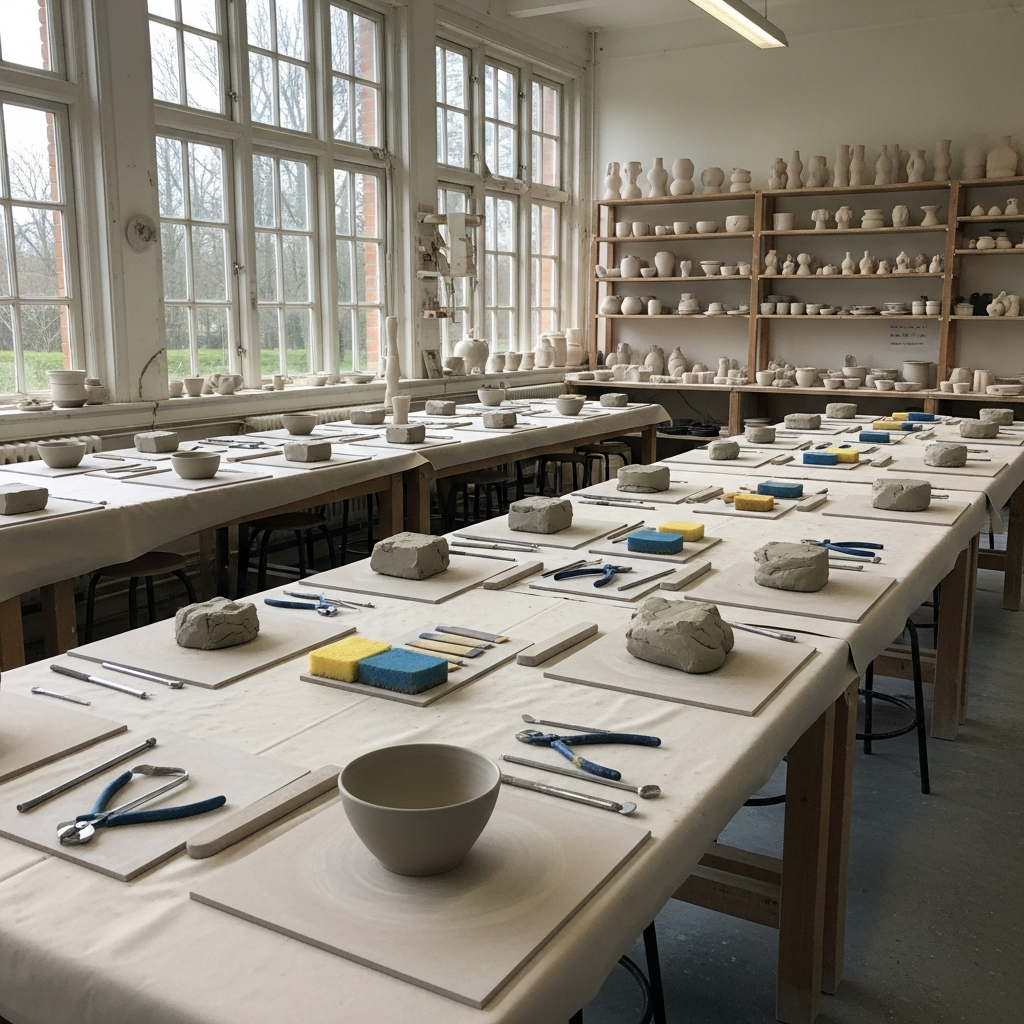
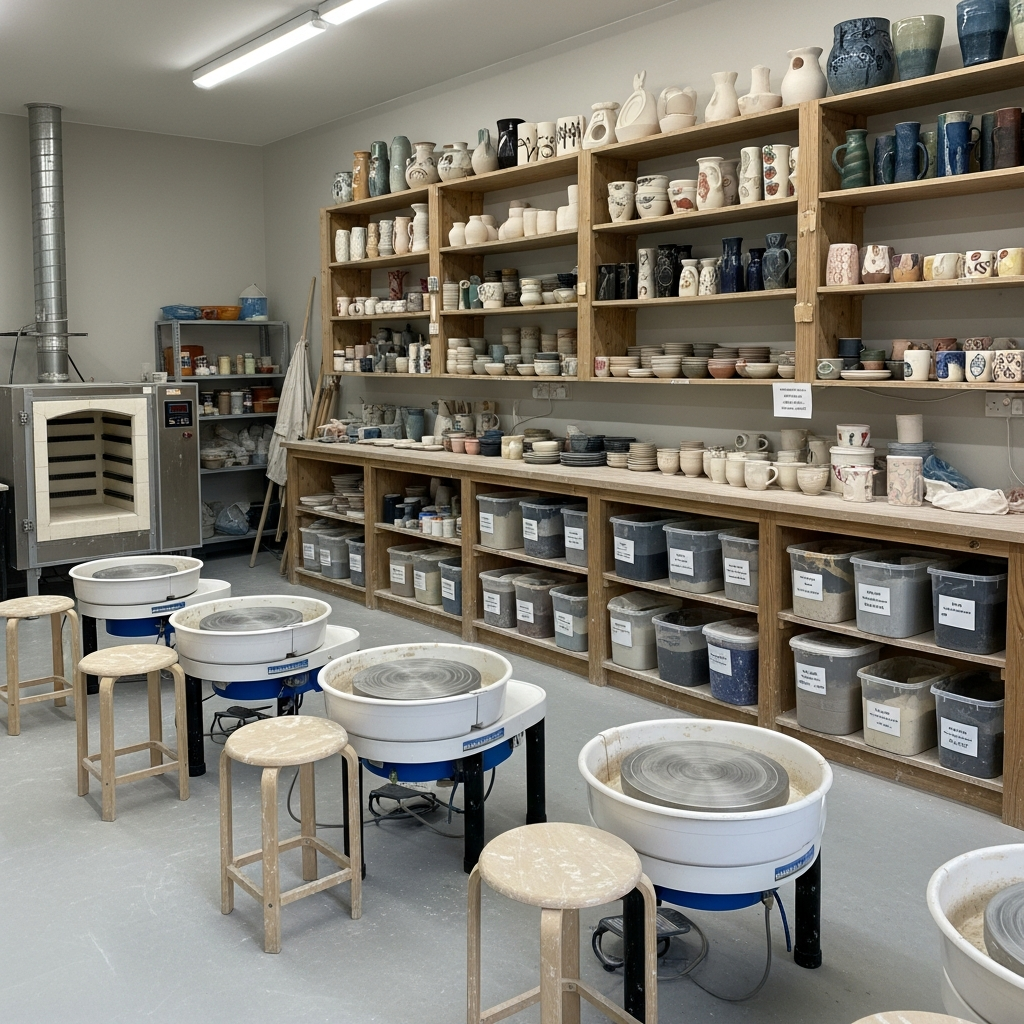
To help you picture what you’re looking for, imagine walking into a well-run UK after-school pottery club.
You see:
- Tables covered with wipeable cloths or boards
- Clearly labelled tools in pots or trays
- Clay stored safely in tubs or bags
- A whiteboard or flipchart showing the plan for the session
- Finished pieces drying on shelves, each labelled with names
The room feels:
- Calm but purposeful
- A bit messy, but in a controlled, organised way
- Safe, with clear walkways and no obvious hazards
Staff are:
- Moving around the room, checking in with children
- Demonstrating techniques step-by-step
- Offering encouragement and gentle guidance
This is the kind of environment you’re aiming to find for your child.

18. Practical Example: Questions and Answers with a Hypothetical Provider
To make the process more concrete, here’s an example of how a conversation with a potential provider might go.
Parent: “Do all your staff have enhanced DBS checks?”
Provider: “Yes, all staff working directly with children have enhanced DBS checks, renewed every three years. Our Designated Safeguarding Lead is [Name], and our safeguarding policy is available on request.”
Parent: “What’s your usual ratio of adults to children?”
Provider: “We work on a maximum of 1:10 for KS2 and 1:8 for KS1. For groups with higher SEND needs, we reduce numbers or add an extra staff member.”
Parent: “My child is autistic and can get overwhelmed in noisy environments. How could you support them?”
Provider: “We can offer a consistent seat each week, a visual timetable, and a quieter corner if they need a break. We’re happy to speak to their SENCo or look at their EHCP to understand what works best.”
Parent: “Are there any extra costs beyond the term fee?”
Provider: “Our term fee includes all clay, basic glazes and two firings per project. There are no extra charges unless you request additional pieces to be fired, which is £2 per item.”
This kind of clear, confident, transparent response is what you’re looking for.
19. Final Thoughts and Next Steps
Choosing an after-school pottery or clay club in the UK is about much more than finding the nearest or cheapest option. You’re looking for a setting where your child will be safe, encouraged and genuinely taught, not just kept busy.
If you:
- Check safeguarding and DBS arrangements
- Ask about staff qualifications and experience
- Understand the full costs and what’s included
- Look for evidence of thoughtful planning and progression
- Ensure your child’s SEND or individual needs will be respected
…you’ll be well placed to choose a club that offers real value and long-term benefits.
Pottery and clay work can become a lifelong passion, a calming outlet, or simply a joyful weekly highlight. With careful research and the right questions, you can find a club where your child feels proud of what they create and looks forward to every session.
Use the checklists in this guide as you explore local options, talk to other parents, and visit potential clubs. A little time invested now can make a big difference to your child’s after-school experience for years to come.