Private Maths Tutors vs School Intervention: Which Really Boosts SATs Scores for UK Primary Kids?

Private Maths Tutors vs School Intervention: Which Really Boosts SATs Scores for UK Primary Kids?
For many UK parents, Year 5 and Year 6 can feel like a countdown clock to SATs. If your child is wobbling in maths, you may be torn between:
- Relying on school intervention groups (booster sessions, small-group tuition, catch-up programmes), or
- Paying for a private maths tutor or after-school maths club.
This guide unpacks the reality behind both options so you can make a calm, informed decision that suits your child, your budget and your family life – not just the pressure of SATs.
We’ll cover:
- How SATs and school accountability really work in England
- What school intervention actually looks like (and its limits)
- What private maths tutoring can offer (and common pitfalls)
- Safeguarding, Ofsted and staff qualification questions to ask
- Typical UK costs, hidden fees and how to avoid being overcharged
- How each option affects confidence, anxiety and long-term learning
- SEND inclusion and what good support should look like
- Red flags to watch for in any club or tutor
- Practical checklists and question lists for school and tutors
1. Understanding SATs and Why Maths Feels So High-Stakes
1.1 What SATs Actually Are (England)
In England, Key Stage 2 SATs are taken in May of Year 6. For maths, children sit:
- Arithmetic paper (Paper 1)
- Reasoning papers (Papers 2 and 3)
Papers are marked externally and converted into a scaled score:
- 100 = working at the expected standard
- Below 100 = working below expected
- Above 100 = working above expected
SATs are not used to award a qualification to your child, but they do:
- Feed into secondary school baseline data
- Affect how your child’s primary school is judged by Ofsted and the DfE
- Sometimes influence Year 7 grouping/setting (though many secondaries re-test)
1.2 Why Schools Push Maths Intervention
Because SATs results are part of how schools are held to account, many primary schools:
- Run after-school booster clubs
- Offer small-group tuition during or after school
- Use Pupil Premium or National Tutoring Programme (NTP) funding for targeted maths support
This can be very positive, but it also means:
- Some children feel labelled as “behind”
- Parents feel pressure to add private tutoring on top
- Families worry about burnout and stress
1.3 What “Boosting SATs Scores” Really Means
When you’re comparing private tutors vs school intervention, it helps to be clear what you actually want:
- Short-term score boost (e.g. from a scaled score of 95 to 100+)
- Solid foundations for secondary maths (fractions, place value, reasoning)
- Reduced anxiety and better confidence
- Better learning habits (independence, resilience, problem-solving)
Different options are better at different things. A child can scrape a higher SATs score yet still feel lost in Year 7. Ideally, you want both: a fair SATs outcome and long-term confidence.
2. What Does School Maths Intervention Actually Look Like?
2.1 Common Types of School Intervention
Most primary schools in England use a mix of:
- In-class support – teaching assistants (TAs) or additional adults circulating during maths lessons
- Small-group withdrawal – children taken out of class for targeted sessions
- After-school booster clubs – often free, run by class teachers or TAs
- National Tutoring Programme (NTP) – subsidised small-group tuition, sometimes delivered by external tutors
Intervention may focus on:
- Key number facts (times tables, bonds to 10/100)
- Gaps in place value, fractions, decimals
- Exam technique and timing
- Practice with SATs-style questions
2.2 Strengths of School-Based Intervention
School intervention has some real advantages:
- Teachers know the curriculum and the exact SATs expectations
- Staff see your child’s day-to-day work, not just a snapshot
- They can align support with class topics and upcoming assessments
- It’s often free or heavily subsidised
- It’s usually on-site, so no extra travel
For many children, especially those just below expected standard, this can be enough to nudge them over the line.
2.3 Limitations and Pressures
However, school intervention also has constraints:
- Group sizes can still be 6–10+ children
- Sessions may be short (20–30 minutes) and infrequent
- Focus can be heavily test-driven, not conceptual
- Children may feel stigmatised being taken out of class
- Staff are often tired after a full teaching day
Some parents also report:
- Limited individual feedback about what’s being covered
- Difficulty getting regular updates from busy teachers
- Interventions being stopped once a child is “borderline secure”, even if confidence is still fragile
2.4 Ofsted and School Intervention
Ofsted doesn’t inspect individual interventions, but it does look at:
- How well schools identify and support pupils who are behind
- The impact of interventions on progress
- How schools use Pupil Premium and other funding
A school with a strong culture of inclusive, well-planned intervention is more likely to:
- Use evidence-based approaches
- Monitor progress carefully
- Communicate better with parents
You can usually find the school’s latest Ofsted report online and look for comments about:
- Support for lower attainers
- SEND provision
- Use of assessment to inform teaching
3. What Does Private Maths Tutoring Offer?
3.1 Types of Private Maths Support in the UK
Private support can look very different depending on the provider:
- One-to-one private tutor (in your home, their home, or online)
- Small-group tuition centre (e.g. local learning centre, community hall)
- Franchise-based maths clubs (e.g. worksheet-based or mastery-style programmes)
- Online platforms (live or recorded sessions, sometimes with UK-qualified teachers)
Each has pros and cons in terms of:
- Personalisation
- Cost
- Flexibility
- Social interaction
3.2 Potential Advantages Over School Intervention
A good private tutor or club can offer:
- Individual attention – teaching tailored to your child’s exact gaps
- Flexible pacing – more time on tricky topics, less on what’s secure
- Calmer environment – fewer distractions than a busy classroom
- Choice of tutor – you can look for someone whose style suits your child
- Regular feedback – direct communication with you after each session
For anxious children, the chance to ask questions without fear of judgement can be transformative.
3.3 Risks and Drawbacks
However, private tutoring is not automatically better:
- Not all tutors are qualified teachers or trained in the national curriculum
- Some focus on shortcuts and tricks, not deep understanding
- Quality is hugely variable – there is no single regulator for private tutors
- It can be expensive, especially in London and the South East
- Over-tutoring can lead to burnout and resentment
You also need to consider safeguarding carefully (more on this below), especially for one-to-one tuition.
4. Safeguarding and Ofsted: What Parents Must Know
4.1 Ofsted and Private Tutors – Common Misunderstanding
Many parents assume all tutoring providers are Ofsted-registered. They are not.
- Individual private tutors are not usually registered with Ofsted.
- Some tuition centres or after-school clubs may be on the Ofsted Childcare Register if they:
- Care for children under 8 for more than 2 hours at a time, and
- Meet certain criteria around childcare rather than pure education.
Being Ofsted-registered can be a positive sign (policies, safeguarding, complaints procedures), but lack of registration doesn’t automatically mean poor quality. It does mean you must be more proactive in checking safety.
4.2 Essential Safeguarding Checks for Any Tutor or Club
Whether it’s a school-run booster or a private tutor, you should feel confident asking about:
- Enhanced DBS check (Disclosure and Barring Service)
- Ask: “Do you have a current enhanced DBS check for working with children?”
- For individuals, you can ask if they’re on the DBS Update Service.
- Safeguarding training
- Ask: “What safeguarding training have you had, and when was it last updated?”
- Policies and procedures (for centres/clubs)
- Child protection policy
- Behaviour policy
- Health and safety procedures
- Data protection (how they store your child’s information)
- Venue safety
- Secure entry/exit
- Fire exits and procedures
- First aid provision
In a school-based intervention, these are usually covered by the school’s existing systems. For private tutors, you must ask directly.
4.3 One-to-One Tutoring: Extra Safeguarding Considerations
If tuition is one-to-one, especially in a home setting:
- Ideally, sessions should take place in a family room, not a bedroom
- A parent or carer should be within earshot
- For online tutoring:
- Use a shared family device where possible
- Make sure your child knows how to end a call and tell you if anything feels uncomfortable
- Check the platform’s recording and safeguarding policies
If a tutor resists reasonable safeguarding questions, treat this as a major red flag.
5. Staff Qualifications: What Actually Matters for Maths and SATs?
5.1 In School: Who Delivers Intervention?
In primary schools, intervention may be led by:
- Class teachers (QTS – Qualified Teacher Status)
- Higher Level Teaching Assistants (HLTAs)
- Teaching Assistants (TAs)
- External tutors via NTP or other programmes
Quality can be excellent with any of these, but key questions are:
- Do they understand the KS2 maths curriculum and SATs format?
- Are they trained in specific intervention programmes (e.g. Number Sense, Third Space Learning, Power of 2)?
- Do they get time to plan and review sessions, or is it squeezed in?
5.2 For Private Tutors: What to Look For
There is no legal requirement for private tutors to hold teaching qualifications. However, for KS2 SATs maths, strong options include:
- Qualified primary teachers with recent classroom experience
- Secondary maths teachers who understand KS2–KS3 transition
- Tutors with a maths-related degree plus proven experience with KS2 curriculum
Useful things to ask:
- “What experience do you have with Year 5/6 maths and SATs?”
- “How do you keep up to date with the national curriculum and assessment changes?”
- “Can you talk me through how you’d support a child who is currently working at [your child’s level]?”
5.3 Don’t Be Blinded by Buzzwords
Be cautious of:
- Vague claims like “exam expert” without evidence
- Overuse of jargon without clear explanations
- Providers who can’t explain how they teach, only that they get “results”
Ask for:
- Concrete examples of progress (e.g. “Most of my pupils move from working towards to expected within X months”)
- References or testimonials from other parents (ideally local)
6. Cost Comparison: What UK Parents Can Expect to Pay
6.1 Typical UK Prices for Private Maths Tutors (KS2)
Prices vary by region and tutor experience, but as a rough guide (per hour):
- Outside London / many regions: £20–£35
- London and some high-demand areas: £30–£60+
Factors that push prices up:
- QTS and strong track record
- Specialist SEND expertise
- Travel time to your home
- Short-term, high-pressure SATs prep packages
6.2 Tuition Centres and Group Clubs
For small-group tuition (3–8 children), you might see:
- £10–£25 per session (usually 60–90 minutes)
Some centres charge:
- Registration or assessment fees (e.g. £20–£60)
- Materials or workbook fees
- Higher rates for short-term SATs booster courses
6.3 School Intervention Costs
Most school-based interventions are:
- Free to parents, funded from the school budget or Pupil Premium
- Or heavily subsidised via the National Tutoring Programme
Some schools may ask for a small voluntary contribution for extended after-school clubs, but this should be clear and not compulsory.
6.4 Hidden Costs and Practicalities
When comparing options, factor in:
- Travel and parking to tuition centres
- Time off work to ferry children to and from sessions
- Cancellation policies – will you still be charged if your child is ill?
- Minimum term contracts – some centres require a termly commitment
Always ask for clear written information about:
- Fees
- Notice periods
- What’s included (resources, assessments, reports)
7. Impact on Confidence, Anxiety and Long-Term Learning
7.1 The Emotional Side of SATs Support
Children pick up on adult anxiety. If support feels like:
- A punishment for being “behind”, or
- Endless extra work with no fun,
it can damage self-esteem and motivation.
Good support – whether in school or privately – should:
- Normalise struggle as part of learning
- Celebrate small wins
- Build a sense of “I can do this if I keep trying”
7.2 How School Intervention Can Affect Confidence
Positives:
- Children see that teachers believe in them enough to invest extra time
- Working in a small group can feel less intimidating than whole-class
- Familiar environment and adults can be reassuring
Risks:
- Feeling singled out or “the one who needs help”
- Missing out on other curriculum areas if withdrawn from class
- Sessions that focus only on test drills can feel demoralising
7.3 How Private Tutoring Can Affect Confidence
Positives:
- One-to-one attention can quickly fill gaps and reduce confusion
- A good tutor can become a trusted adult who champions your child
- Children may feel more comfortable admitting they don’t understand
Risks:
- If pitched too high, sessions can reinforce a sense of “I’m rubbish at maths”
- Over-scheduling can lead to exhaustion (especially on top of school clubs)
- If parents talk about the cost a lot, children may feel pressure to “perform”
7.4 Balancing Academic Gains with Wellbeing
Ask yourself:
- Is my child more relaxed about maths since starting support?
- Are they willing to have a go at tricky questions?
- Do they show less avoidance (e.g. fewer tummy aches on maths days)?
If scores are creeping up but anxiety is soaring, it may be time to:
- Reduce the number of sessions
- Switch to a more playful, conceptual approach
- Focus on core understanding rather than test scores for a while
8. SEND Inclusion: What If My Child Has Additional Needs?
8.1 School Responsibilities for SEND
Schools have a legal duty under the SEND Code of Practice to:
- Identify and assess additional needs
- Provide reasonable adjustments and support
- Involve parents in planning
For maths intervention, this might mean:
- Smaller groups or one-to-one support
- Use of concrete resources (counters, number lines, base-10)
- Extra time or rest breaks
- Adjusted teaching methods (visual, practical, step-by-step)
If your child has an EHCP or is on SEN Support, ask how their plan links to any SATs-focused intervention.
8.2 Private Tutors and SEND
Not all tutors are experienced with SEND. If your child has:
- Dyslexia or dyscalculia
- ADHD or autism
- Speech, language or communication needs
- Anxiety or mental health difficulties
…you’ll want someone who can adapt.
Questions to ask:
- “What experience do you have with children with [specific need]?”
- “How would you adapt your teaching for a child who… (e.g. struggles with working memory, finds word problems overwhelming)?”
- “Are you familiar with any specific interventions or approaches for dyscalculia / maths anxiety?”
8.3 Joint Working Between School and Tutor
For children with SEND, the best outcomes often come when school and tutor communicate (with your consent):
- Sharing IEPs or key targets
- Agreeing on consistent methods (e.g. same way of setting out column addition)
- Avoiding conflicting messages that confuse your child
You can:
- Ask school if they’re happy to share key information with the tutor
- Ask the tutor to provide brief written updates you can pass to school
9. Borough Differences and Local Realities
9.1 Variation Between Local Authorities
Provision can vary widely between:
- Inner-city boroughs (e.g. inner London, Birmingham, Manchester)
- Rural counties
- More affluent vs more deprived areas
Differences you might notice:
- Availability of school-run boosters – some schools run extensive programmes, others very little
- Access to NTP-funded tutoring – some local authorities and trusts have embraced it more than others
- Density of private tutors – more choice (and higher prices) in some boroughs
9.2 Grammar School Areas and Extra Pressure
In areas with grammar schools (e.g. parts of Kent, Buckinghamshire, some London boroughs), there can be:
- Higher demand for tutoring from Year 4 onwards
- A culture where “everyone has a tutor”
- More competitive after-school maths clubs
This can make you feel you’re failing your child if you don’t pay for extra support. Try to focus on your child’s needs, not local arms races.
9.3 Using Local Networks Wisely
Local Facebook groups, WhatsApp chats and school gate conversations can be useful for:
- Recommending trusted tutors
- Sharing experiences of school intervention quality
But remember:
- One child’s “amazing tutor” may not suit your child’s personality or needs
- Some recommendations are influenced by social pressure or status, not actual impact
Use local tips as a starting point, then do your own checks.
10. Red Flags: When to Worry About Quality or Safety
10.1 Red Flags in School-Based Intervention
Speak to school if you notice:
- Your child regularly missing favourite subjects for intervention without discussion
- No clear explanation of what the group is working on
- Your child saying they just do worksheets with little explanation
- No sense of progress after a term of support
You can request a meeting with the class teacher or SENCO to review support.
10.2 Red Flags in Private Tutors and Clubs
Be cautious if:
- The tutor refuses to discuss safeguarding or DBS checks
- There is no written information on fees, cancellation, or complaints
- They guarantee specific SATs scores (no one can promise this)
- They insist on long, expensive contracts with no trial period
- They discourage parental involvement or feedback
- Sessions seem chaotic, with little structure or planning
For online providers, also watch for:
- Poor audio/video quality making learning hard
- Tutors frequently late or cancelling
- No clear way to contact a manager or support team
10.3 Emotional and Behavioural Red Flags
Regardless of setting, pay attention if your child:
- Becomes tearful or distressed before sessions
- Complains of feeling stupid or being laughed at
- Shows sudden changes in behaviour or sleep
These are signs to pause and review what’s happening.
11. What to Ask on a Club or Tutor Visit

11.1 Questions for School About Maths Intervention
When meeting your child’s teacher or maths lead, you might ask:
- Purpose and structure
- “What are the specific maths gaps you’ve identified for my child?”
- “What will the intervention focus on, and how often will it run?”
- Staff and group size
- “Who will deliver the sessions, and how many children will be in the group?”
- Measuring impact
- “How will you track whether the intervention is working?”
- “When will we review progress?”
- Wellbeing and inclusion
- “How will you ensure my child doesn’t feel singled out or miss too much of other learning?”
- “How will this link with any SEND support they already receive?”
11.2 Questions for a Private Tutor or Tuition Centre
- Background and experience
- “What’s your experience with Year 5/6 maths and SATs?”
- “Do you have QTS or other relevant qualifications?”
- Safeguarding and safety
- “Do you have a current enhanced DBS check?”
- “What safeguarding policies do you follow?” (for centres)
- Teaching approach
- “How do you assess a new pupil’s starting point?”
- “How do you balance conceptual understanding with exam practice?”
- Communication
- “How will you keep me updated on progress?”
- “Can I see examples of the resources or activities you use?”
- Practicalities and cost
- “What is your fee structure, and are there any extra charges?”
- “What’s your cancellation policy?”
11.3 Observing the Environment
If you visit a centre or club, look for:
- Calm, organised spaces with clear maths resources
- Secure entry and sign-in procedures
- Visible fire exits and safety information
- Staff who greet children warmly and know their names
If something feels off, trust your instincts and keep looking.
12. How to Decide: Matching Options to Your Child’s Needs
12.1 Start with a Clear Picture of Your Child
Consider:
- Current attainment: working towards / at / above expected
- Main difficulties: number facts, reasoning, word problems, confidence
- Personality: thrives in groups or prefers one-to-one
- Energy levels after school
- Any SEND or health needs
12.2 When School Intervention Might Be Enough
School-based support may be your best first step if:
- Your child is just below expected standard
- The school offers regular, structured intervention with experienced staff
- You have a good relationship with the school and feel listened to
- Budget is tight and you want to avoid extra costs
You can always review after a term and consider private support if needed.
12.3 When Private Tutoring Might Add Real Value
Private tutoring may be particularly helpful if:
- Your child is significantly behind and needs intensive catch-up
- They are anxious and need a very gentle, individual approach
- School intervention is limited or not well-matched to their needs
- You want to focus on long-term understanding, not just SATs
It doesn’t have to be forever – even 10–12 well-targeted sessions can make a difference.
12.4 Combining Both Approaches
Many families find a hybrid approach works best:
- School intervention for core catch-up and familiarity with SATs format
- Private tutor for confidence-building and plugging specific gaps
If you do both, keep an eye on:
- Your child’s tiredness and stress levels
- Overall weekly schedule – ensure there is still time to play and rest
13. Practical Checklists for Parents
13.1 Quick Checklist: Is School Intervention Working?
After 6–8 weeks, you should see at least some of:
- Your child can explain what they’re working on in intervention
- They feel more confident tackling similar questions at home
- Teacher can show evidence of progress (classwork, mini-assessments)
- Your child is not missing large chunks of other learning they enjoy
- Communication with school feels open and responsive
If several of these are missing, request a review.
13.2 Quick Checklist: Is a Private Tutor or Club High-Quality?
Before committing, check:
- Enhanced DBS seen or confirmed
- Clear explanation of experience with KS2 maths and SATs
- Teaching approach focuses on understanding, not just tricks
- Written fees and policies provided
- Willingness to communicate with school (with your consent)
- Your child feels comfortable after a trial session
13.3 Weekly Balance Checklist
Each week, glance at your child’s schedule:
- No more than 2–3 intensive academic sessions after school
- At least one full weekday with no clubs or tutoring
- Time for physical activity and free play
- Adequate sleep (age-appropriate)
- Family time that isn’t about homework or tests
If tutoring is squeezing out everything else, it may be time to scale back.
14. Realistic Expectations: How Much Difference Can Support Make?
14.1 Timeframes for Progress
For a child who is a little behind, with good attendance and no major SEND:
- 1 term of focused intervention (school or private) can often move them from working towards to close to expected
- 2–3 terms of consistent support can consolidate understanding and confidence
For children with more complex needs, progress may be slower but still meaningful.
14.2 What Tutors and Schools Can’t Control
Even with excellent support, outcomes are affected by:
- Illness or absence
- Test-day nerves
- The specific mix of questions on the SATs papers
No ethical tutor or teacher will guarantee a particular scaled score. Instead, look for:
- Clear evidence of improved understanding
- Better independence in tackling questions
- Reduced anxiety around maths
14.3 Thinking Beyond SATs
Remember:
- Secondary schools often re-test in Year 7 and adjust groups
- A child who has learned to think mathematically will benefit far beyond one set of tests
- Confidence in maths supports science, technology, everyday life (money, time, problem-solving)
Your ultimate goal is not just a number on a report, but a child who believes “I can learn this”.
15. Case-Style Scenarios: Matching Options to Different Children
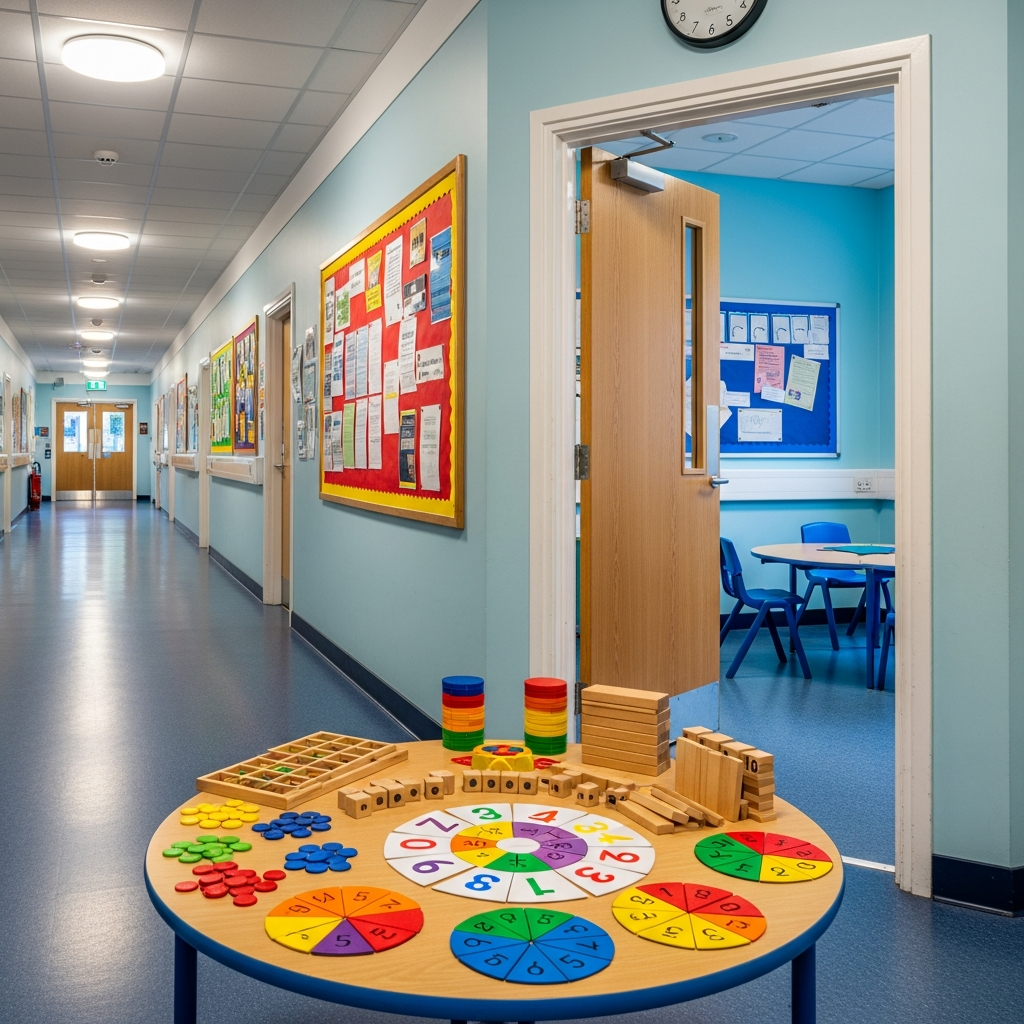
15.1 Child A: Quiet, Just Below Expected
- Year 6, tends to stay under the radar
- Teacher says they’re just below expected in reasoning
- School offers twice-weekly small-group booster after school
Best starting point:
- Accept school intervention
- Ask for a brief progress update after half a term
- Support at home with light practice (e.g. 10–15 minutes, 2–3 times a week)
Consider private tutoring only if:
- Confidence remains low
- School intervention is inconsistent or poorly targeted
15.2 Child B: Anxious, With Dyslexia
- Year 5, very anxious about maths
- Has dyslexia and struggles with word problems
- School intervention is mainly worksheet-based
Best approach:
- Meet with SENCO to review support and ensure it’s dyslexia-friendly
- Look for a private tutor with SEND experience, focusing on:
- Visual supports
- Breaking down word problems
- Building confidence gradually
Aim for short, regular sessions rather than long, intense ones.
15.3 Child C: High Ability but Perfectionist
- Year 6, already above expected
- Becomes very upset by any mistakes
- School offers extension work but no specific booster
Best approach:
- Private tutor or enrichment club that focuses on rich problem-solving, not just harder sums
- Emphasis on growth mindset and learning from mistakes
Here, the goal is not a huge SATs jump but healthy attitudes and challenge.
16. Summary: So Which Really Boosts SATs Scores?
When you strip away the pressure and myths:
- School intervention is often the best first line of support – it’s free, aligned with the curriculum and delivered by staff who know your child.
- Private tutoring can add real value when it is high-quality, well-matched to your child, and used thoughtfully rather than as a panic response.
The most powerful combination is usually:
- Clear communication with school about your child’s needs and progress
- Targeted, evidence-based support (school and/or private)
- A strong focus on confidence, understanding and wellbeing, not just scores
If you’re unsure where to start:
- Talk to your child’s class teacher about their current maths profile.
- Ask what school intervention is available and how it’s monitored.
- If needed, explore local tutors or clubs, using the checklists and questions in this guide.
- Keep checking in with your child – their voice and wellbeing matter most.
You don’t need to do everything. You just need to choose one or two well-thought-through supports that fit your child and your family. With calm, consistent help, most children can make meaningful progress in maths – for SATs, and far beyond.