Mess-Free Arts & Crafts Clubs for Kids: What UK Parents Need to Know Before Booking
Mess-Free Arts & Crafts Clubs for Kids: What UK Parents Need to Know Before Booking
Mess-free arts and crafts clubs sound like a dream: your child gets to be creative, and you don’t end up scrubbing PVA glue off school jumpers at 9pm. But “mess-free” can mean very different things from one provider to another, and not all clubs are equal in quality, safety or educational value.
This guide is written for UK parents who want genuinely well-run, low-mess arts and crafts clubs – not just a worksheet at a table – and who care about safeguarding, staff qualifications, value for money and long-term benefits for their child.
We’ll walk through what “mess-free” should (and shouldn’t) mean, how to judge quality, what to ask on a visit, and how to spot red flags before you hand over your child – and your direct debit details.
1. What Does “Mess-Free” Really Mean in an Arts & Crafts Club?
“Mess-free” is a marketing phrase, not a regulated standard. In UK after-school club advertising it can mean anything from:
- Thoughtfully managed mess – aprons, table covers, washable materials, clear routines for tidying up.
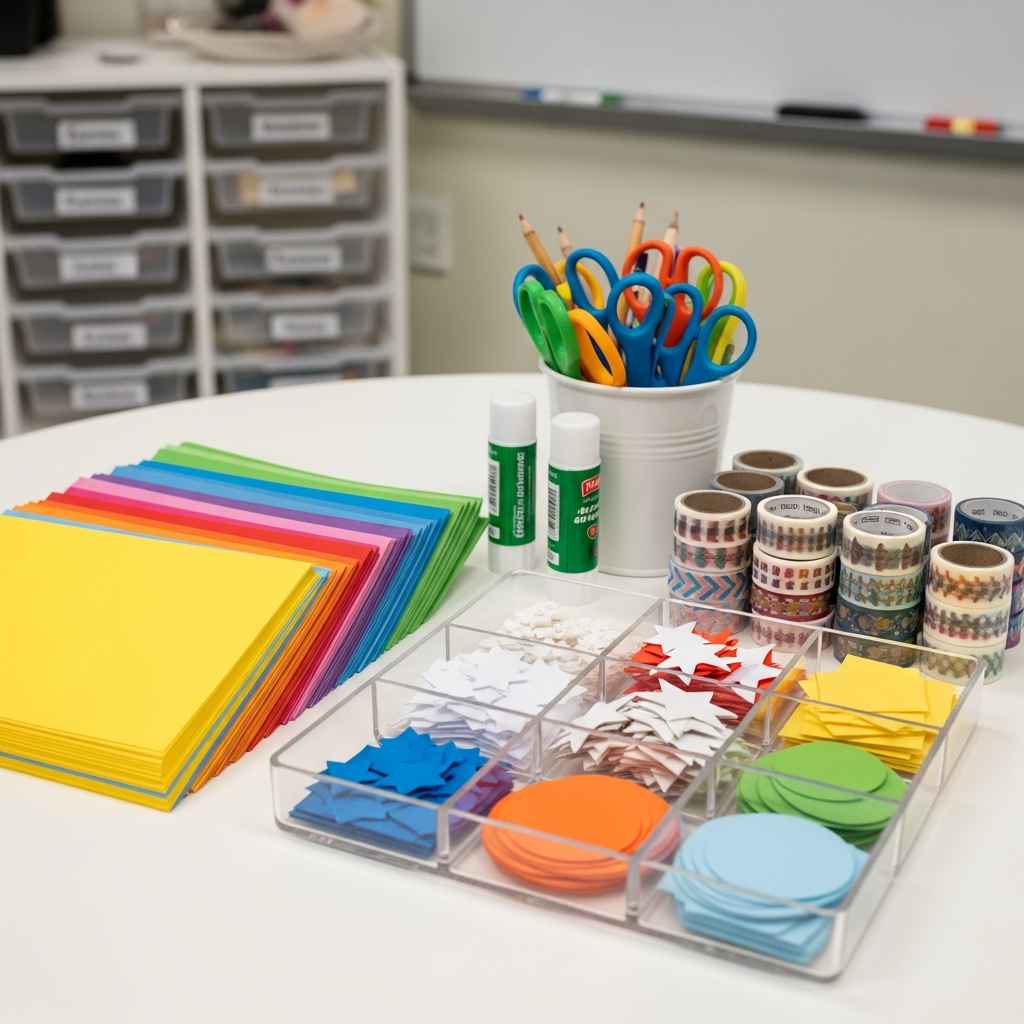
- Low-spill activities – collage, paper crafts, stickers, origami, dry clay, pre-cut foam shapes.
- Almost no actual art – colouring sheets and word searches, because the provider doesn’t want to clean up.
1.1 Healthy mess vs. chaos
A good arts and crafts club will accept some level of creative mess, but manage it so:
- Children’s clothes and school bags are protected.
- The room is left clean for the next group.
- Materials are organised and safe.
“Mess-free” should mean low stress for you and the school, not low creativity for your child.
1.2 Questions to ask about mess management
When you speak to a provider, ask:
- “What does ‘mess-free’ mean in your club?”
- “Do you use aprons or protective clothing?”
- “How do you protect school furniture and carpets?”
- “What types of materials do you use most weeks?”
You’re listening for a balance: they should talk about protective measures and routines, not just avoiding paint altogether.
2. Types of Mess-Free Arts & Crafts Clubs in the UK
Across the UK you’ll see a range of “mess-free” or “low-mess” creative clubs. Understanding the differences helps you compare like-for-like.
2.1 Paper and card-based craft clubs
Common in primary schools and church halls, these focus on:
- Card-making
- Origami and paper folding
- Scrapbooking and journalling
- Paper weaving and simple bookbinding
Mess level: Low – mainly paper scraps and glue sticks.
What to check:
- Are scissors age-appropriate and well supervised?
- Are templates pre-cut for younger children to avoid frustration?
- Do children get to design their own work, or just copy an example?
2.2 Dry media art clubs
These use materials that are easy to clean and unlikely to stain:
- Colouring pencils and felt tips
- Oil pastels and chalk pastels (with fixative or careful use)
- Charcoal with mats or boards
Mess level: Low to moderate – potential dust from pastels.
What to check:
- Are tables covered when using dusty materials?
- Are children taught how to use fixative sprays safely (or is this adult-only)?
- Is there good ventilation if sprays are used?
2.3 Craft kit and model-making clubs
These often use pre-packaged kits:
- Foam and felt kits
- Simple sewing cards
- Build-your-own cardboard models
- Lego-style creative building (technically more STEM, but often marketed as creative club)
Mess level: Very low – mostly small pieces to tidy.
What to check:
- Are kits age-appropriate, with clear instructions?
- Are small parts managed safely for younger children?
- Is there any open-ended creativity, or just following instructions?
2.4 Digital and design-focused clubs
Some “mess-free art” clubs are screen-based:
- Digital drawing on tablets
- Simple animation or stop-motion using school devices
- Graphic design basics for older primary or secondary pupils
Mess level: Physically none – but screen time considerations.
What to check:
- Are devices filtered and monitored according to the school’s online safety policy?
- Is there a balance between screen and off-screen creative thinking?
- Are children taught about copyright and using images responsibly?
2.5 Low-mess painting and printing clubs
Some providers manage paint in a very controlled way:
- Paint sticks / solid tempera sticks
- Watercolour pencils activated with minimal water
- Gel plates for controlled printing
Mess level: Low if well managed.
What to check:
- Are children wearing aprons or old shirts?
- Are paints washable and non-toxic?
- How is water managed to avoid spills?
3. Developmental Benefits of Arts & Crafts – Even When They’re “Mess-Free”
Parents sometimes worry that “mess-free” means “less beneficial”. It doesn’t have to. A well-designed low-mess club can still support:
3.1 Fine motor skills and handwriting readiness
Cutting, folding, sticking and drawing all help with:
- Pencil grip and control
- Hand–eye coordination
- Bilateral coordination (using both hands together)
This can be especially helpful for children in Reception to Year 3, or older children who struggle with handwriting.
3.2 Confidence and self-esteem
Completing a project and taking it home builds a sense of:
- “I can stick at something and finish it.”
- “I’m good at creative things, not just tests.”
Look for clubs where children:
- Make choices (colours, layouts, themes).
- Are praised for effort and ideas, not just neatness.
3.3 Emotional regulation and wellbeing
Arts and crafts can be calming after a busy school day. Low-mess activities can still:
- Provide a quiet, focused environment.
- Offer a break from screens and academic pressure.
- Allow children to express feelings through colour and design.
Ask providers:
- “How do you support children who arrive dysregulated after school?”
- “Do you build in calm starts or reflection time?”
3.4 Social skills and teamwork
Even if each child has their own project, a good club will:
- Encourage sharing of materials.
- Use paired or small-group tasks.
- Teach turn-taking and positive feedback.
This is particularly valuable for children who are shy, anxious, or new to the school.
4. Safety, Safeguarding and Ofsted: What UK Parents Must Check
Any after-school club in the UK that looks after children without a parent present must take safeguarding seriously. Arts and crafts add extra considerations around tools and materials.
4.1 Ofsted registration – when it applies
Not every arts and crafts club needs to be Ofsted-registered. It depends on:
- Age of children – under 8s are the key group.
- Length and frequency – regular childcare vs occasional workshops.
- Purpose – childcare vs purely educational/enrichment.
In many cases, clubs run on school premises immediately after school fall under the school’s existing safeguarding and Ofsted framework, even if run by an external provider.
Ask:
- “Are you Ofsted-registered, or covered under the school’s registration?”
- “Which Ofsted registration or URN applies to this club?”
If they are not registered, they should be able to explain clearly why they are exempt and how safeguarding is still managed.
4.2 Safeguarding policies and DBS checks
Non-negotiables:
- All staff and regular volunteers must have enhanced DBS checks.
- There must be a named Designated Safeguarding Lead (DSL) for the club or the school.
- Staff should know how to report concerns about a child.
Ask to see (or at least discuss):
- Safeguarding policy
- Behaviour policy
- Collection and late pick-up procedures
You can ask directly:
- “Who is your Designated Safeguarding Lead for this club?”
- “How are staff trained in safeguarding and child protection?”
4.3 Health and safety with art materials
Even low-mess clubs use materials that need risk assessment:
- Scissors
- Glue guns (if used)
- Craft knives (for older groups, usually staff-only)
- Aerosol fixatives or sprays
Check:
- Are scissors age-appropriate and counted in and out?
- Are hot glue guns low-temperature and used only by staff or older pupils with close supervision?
- Are any aerosols used away from children and in ventilated areas?
- Are all materials non-toxic and suitable for the age group?
4.4 Ratios and supervision
While exact ratios vary, as a rule of thumb for primary-age arts clubs you should expect something like:
- 1:8 for Reception/Key Stage 1 (4–7 years) in a craft-heavy environment.
- 1:10–12 for Key Stage 2 (7–11 years), depending on activities.
Ask:
- “What is your maximum group size?”
- “What adult-to-child ratio do you work to?”
- “How do you manage tools like scissors and glue guns safely?”
5. Staff Qualifications and Experience: Who’s Actually Running the Club?
A club can be advertised beautifully but still be led by someone with minimal experience of children.
5.1 What’s realistic to expect
Not every arts and crafts club will be run by a qualified teacher, but you should expect at least:
- A lead adult with:
- Experience working with children in a school, nursery, youth or community setting.
- Basic safeguarding training.
- First aid training, or immediate access to a first aider on site.
- Assistants who are:
- DBS-checked.
- Briefed on behaviour management and safeguarding.
5.2 Useful qualifications and training
Look for (or ask about):
- Teaching qualifications (QTS, PGCE) – not essential, but reassuring.
- Level 2 or 3 childcare qualifications (e.g. Level 3 Diploma for the Early Years Workforce, Level 3 Playwork).
- Youth work qualifications.
- Paediatric First Aid.
- Safeguarding Level 1/2 training.
- SEND awareness or specific training (e.g. autism, ADHD).
Ask:
- “What experience do your staff have working with children of this age?”
- “Who leads the session, and what is their background?”
- “Do staff receive regular safeguarding and first aid training?”
5.3 How staff approach behaviour and inclusion
The best arts clubs are run by adults who:
- Understand child development and realistic expectations.
- Use positive behaviour strategies.
- Are patient with different learning speeds and styles.
Ask for examples:
- “How would you support a child who is anxious about joining in?”
- “What happens if a child refuses to follow instructions with scissors or tools?”
You’re listening for calm, consistent, non-shaming approaches.
6. What a High-Quality Mess-Free Arts & Crafts Session Looks Like
It can be hard to picture what you’re actually paying for. Here’s what a strong session typically includes.
6.1 A predictable, calm structure
A good club will have a clear routine, for example:
- Arrival and snack (if provided) – calm welcome, register taken.
- Introduction to the activity – short demo, safety reminders.
- Main creative time – children working with support.
- Sharing and tidy-up – showing work, putting materials away.
- Calm end – story, quiet drawing, or reflection while waiting for collection.
6.2 Clear learning and wellbeing aims
Even if it’s not a formal lesson, staff should be able to say what children are gaining, such as:
- “Today we’re practising cutting curves and using a hole punch safely.”
- “We’re exploring patterns and symmetry.”
- “We’re working on taking turns with shared resources.”
6.3 Balance of guidance and freedom
You want to avoid both extremes:
- Too rigid: everyone makes an identical card, no choices.
- Too vague: children are left to “do whatever” with minimal support.
Look for:
- A demonstration plus options (e.g. different colours, layouts, themes).
- Staff who circulate, ask questions, and encourage children to adapt ideas.
6.4 Calm, organised environment
Signs of quality:
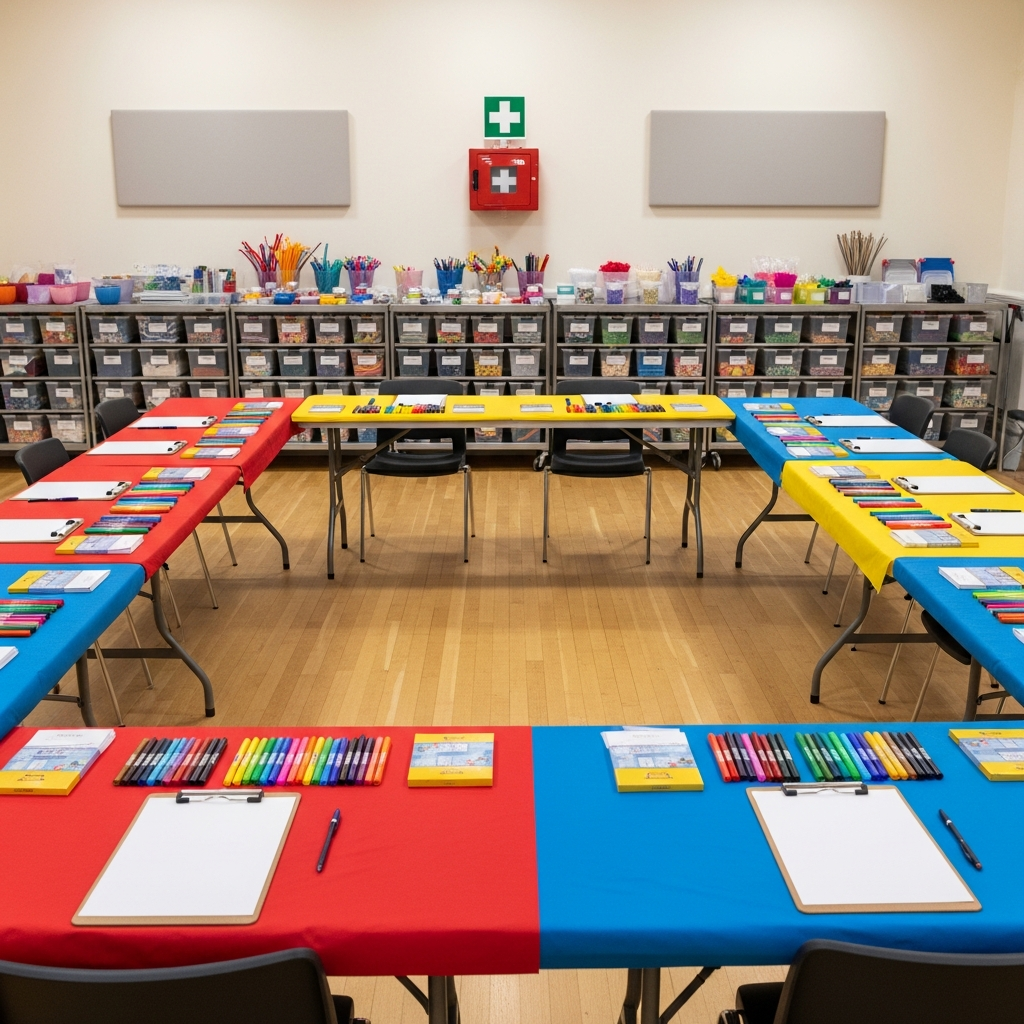
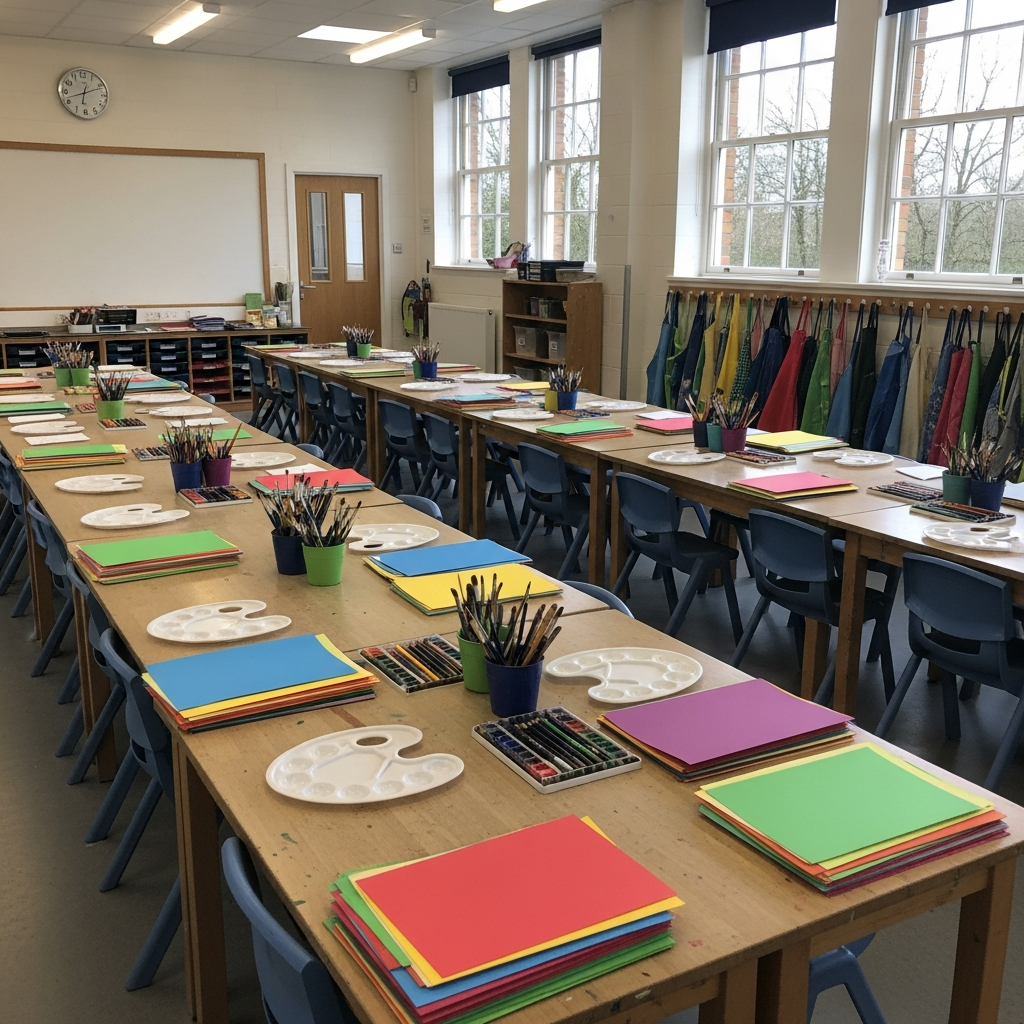
- Materials laid out before children arrive.
- Aprons or table covers ready.
- Clear zones for cutting, gluing, drying.
- A tidy, safe floor – no trip hazards.
If you visit, notice:
- Does the room feel calm but purposeful?
- Are children engaged, not wandering aimlessly or queuing for long periods?
7. UK Costs, Hidden Fees and What’s Reasonable to Expect
Costs vary widely by region and provider, but there are some typical patterns.
7.1 Typical price ranges (as of mid-2020s)
For primary-age after-school arts and crafts clubs in the UK, you might see:
- £5–£8 per session – basic club, often run by school staff, materials included.
- £8–£12 per session – specialist external provider, higher-quality materials, smaller groups.
- £12–£18 per session – premium clubs in London or high-cost areas, or extended sessions including snack and wraparound care.
Holiday workshops or half-day sessions will be priced differently, often £20–£40 per half day depending on location and materials.
7.2 Hidden or extra costs to watch for
Ask directly about:
- Registration fees – one-off joining fees.
- Materials surcharges – extra for special projects (e.g. canvases, clay kits).
- Late collection fees – often charged per 5 or 10 minutes.
- Sibling discounts – sometimes available.
- Refund policies – if your child is ill or you need to cancel.
Clarify:
- “Is everything included in the session price?”
- “Are there any extra charges I should be aware of across the term?”
7.3 Value for money vs. cheapest option
Cheapest is not always best. Consider:
- Staffing quality – experienced staff cost more.
- Group size – smaller groups often mean more individual attention.
- Materials – good-quality, safe, age-appropriate resources.
- Consistency – same staff each week, reliable communication.
It can be worth paying slightly more for a club that:
- Your child genuinely enjoys and looks forward to.
- Feels safe, calm and well organised.
- Supports your child’s confidence and skills.
8. Red Flags: When to Think Twice About a Mess-Free Arts Club
Some warning signs are obvious; others are subtle. Trust your instincts, but also use a clear checklist.
8.1 Organisational red flags
- Vague answers about safeguarding or DBS checks.
- No written policies available on request.
- Last-minute cancellations or frequent timetable changes.
- Poor communication – emails unanswered, unclear booking process.
8.2 Quality and experience red flags
- Children mostly doing colouring sheets week after week.
- Very little finished work coming home, or everything looks identical.
- Staff seem stressed, impatient or disorganised.
- Children left waiting around with nothing to do while staff set up.
8.3 Safety and environment red flags
- Scissors or tools left unattended on tables.
- No clear register or system for checking children in and out.
- Crowded room with trip hazards or blocked exits.
- No visible first aid kit or knowledge of who the first aider is.
8.4 Inclusion and behaviour red flags
- Staff describe children as “naughty” or “difficult” rather than talking about behaviour.
- No willingness to discuss SEND support or reasonable adjustments.
- Children being publicly shamed for mistakes or mess.
- Rigid rules that don’t allow for different needs or energy levels.
If you see several of these, consider looking elsewhere or raising concerns with the school or venue.
9. What to Ask During a Club Visit or Taster Session
If possible, arrange to:
- Watch part of a session.
- Speak to the club leader.
- Chat briefly to other parents at pick-up.
Here are focused questions that get beyond the sales pitch.
9.1 Questions about structure and content
- “What does a typical session look like from arrival to pick-up?”
- “How do you decide on projects across the term?”
- “Do children get to suggest ideas or themes?”
- “How do you support children who finish quickly or who need more time?”
9.2 Questions about safety and safeguarding
- “How do you manage tools like scissors and glue guns?”
- “What is your process if a child is not collected on time?”
- “How do you handle minor injuries or accidents?”
- “Are all staff enhanced DBS-checked, and how often are checks renewed?”
9.3 Questions about behaviour and wellbeing
- “How do you help children settle in if they’re nervous?”
- “What strategies do you use if a child is disruptive or upset?”
- “How do you make sure quieter children are included?”
9.4 Questions about communication with parents
- “How will I know what my child has been doing each week?”
- “Who do I contact if I need to change a booking or raise a concern?”
- “Do you provide termly overviews or photos of projects?” (Check how they handle photo consent and GDPR.)
Take notes after your visit. How you feel about the provider matters as much as the exact words they use.
10. SEND Inclusion and Accessibility in Mess-Free Arts Clubs
Children with special educational needs and disabilities (SEND) can benefit hugely from arts and crafts – especially in a calm, low-mess environment. But inclusion doesn’t happen by accident.
10.1 What good SEND practice looks like
A genuinely inclusive club will:
- Ask about your child’s needs on the registration form.
- Offer a short meeting or phone call to discuss support.
- Be willing to adapt activities (e.g. larger scissors, pre-cut shapes, sensory-friendly materials).
- Provide visual supports – step-by-step pictures, finished examples.
- Allow movement breaks or a quiet corner if needed.
10.2 Reasonable adjustments you can request
Depending on your child’s needs, you might ask for:
- A visual timetable of the session.
- A social story about what will happen at the club.
- Seating near the door or away from noise.
- Extra time to finish projects, or the option to complete at home.
- Alternative tools (e.g. spring-loaded scissors, pencil grips).
Most adjustments are low-cost and practical if the provider is willing.
10.3 Funding and support links with school
If the club runs on school premises, ask:
- “Can you liaise with my child’s class teacher or SENCO?”
- “Are there any strategies that work well in class we could use here?”
Some schools may be able to:
- Share support plans (with your consent).
- Offer advice on communication methods.
- Suggest peer buddies who know your child well.
10.4 Red flags around SEND
Be cautious if a provider says:
- “We can’t take children with additional needs.” (Blanket exclusions can be discriminatory.)
- “We treat all children exactly the same.” (Sounds fair, but ignores individual needs.)
- “We don’t need to know about diagnoses.” (They should want to understand how to support your child.)
11. Borough and Regional Differences Across the UK
Provision varies significantly between, say, an inner London borough and a rural county.
11.1 London and major cities
In areas like London, Manchester, Birmingham, Bristol you’re likely to find:
- A wide range of specialist providers.
- Higher average prices, especially in Zones 1–3 in London.
- Clubs run in:
- School halls
- Community centres
- Arts studios
Common parent concerns:
- Oversubscribed clubs – waiting lists are normal.
- Travel and safety – if clubs are off-site, how are children escorted?
- Cost – balancing multiple clubs with high living costs.
11.2 Suburban and small-town areas
You may see:
- Fewer specialist providers, more school-run clubs.
- Lower prices but sometimes less variety.
- Stronger word-of-mouth networks – local Facebook groups, WhatsApp chats.
Common concerns:
- Limited choice for children with specific interests.
- Clubs cancelling if numbers are low.
11.3 Rural areas
In rural counties, arts clubs may be:
- Linked to village halls, churches or community projects.
- Dependent on volunteers or small charities.
Common concerns:
- Transport – getting children to and from venues.
- Inconsistent provision – clubs running only certain terms.
11.4 Devolved nations: Scotland, Wales, Northern Ireland
While this guide focuses mainly on England, parents in Scotland, Wales and Northern Ireland should note:
- Different regulatory bodies (e.g. Care Inspectorate in Scotland, CIW in Wales, RQIA in Northern Ireland).
- Slightly different curriculum links and terminology.
However, the core questions about safeguarding, staff, quality and inclusion remain the same.
12. Building Confidence and Social Skills Through Low-Mess Creativity
Mess-free doesn’t mean emotion-free. A good arts club can be a powerful space for personal growth.
12.1 For shy or anxious children
Arts and crafts can be less intimidating than sports or drama because:
- There’s a clear task to focus on.
- Children can join in quietly without performing.
- Conversation can happen side-by-side, not face-to-face.
Ask providers:
- “How do you support children who are nervous about joining a new group?”
- “Can my child bring a friend for the first session?”
12.2 For children who struggle with perfectionism
Low-mess crafts can be structured to:
- Emphasise experimentation over perfect results.
- Use quick, low-stakes activities where mistakes are easy to fix.
- Encourage sharing of ‘work in progress’, not just finished pieces.
Look for staff who say things like:
- “There’s no right or wrong way to do this.”
- “We’re trying out ideas today, not making masterpieces.”
12.3 For children with friendship difficulties
Clubs can:
- Provide shared projects (e.g. group collage, mural on paper, joint model).
- Use paired tasks that rotate partners gently.
- Teach kind feedback – “two stars and a wish” style comments.
Ask:
- “Do you build in any collaborative projects or partner work?”
13. Practical Checklists for Parents
Use these lists to compare clubs and feel more confident in your choice.
13.1 Quick comparison checklist
When looking at two or three options, compare:
- Clear description of activities (not just “arts and crafts”).
- Transparent pricing with no hidden fees.
- Reasonable group size and adult-to-child ratio.
- Evidence of safeguarding policy and DBS checks.
- Willingness to discuss SEND and individual needs.
- Calm, organised environment on visit.
- Children’s work shows variety and individuality.
- Positive, respectful staff interactions with children.
13.2 Questions to ask yourself after a taster session
- Did my child seem happy going in and coming out?
- Could they explain what they did and what they enjoyed?
- Did they bring home something they were proud of?
- Did staff share at least one specific positive comment about my child?
- Did the room look safe and reasonably tidy at the end?
- Do I feel comfortable raising concerns with this provider?
13.3 What to pack for a mess-free arts club
Even “mess-free” clubs can benefit from a small kit:
- Old oversized T-shirt or apron (if not provided).
- Named water bottle.
- Small snack if allowed (check allergy policy).
- Hair tied back if long.
- Any agreed adapted tools (e.g. pencil grips) clearly labelled.
14. How to Talk to Your Child About Joining a Mess-Free Arts Club
Your child’s attitude can make or break the experience. A short, honest conversation helps.
14.1 Framing it positively
Focus on:
- The fun: “You’ll get to make things we don’t have space for at home.”
- The independence: “You’ll have your own club, just like older children do.”
- The low-pressure nature: “It’s not like school work – it’s time to relax and be creative.”
14.2 Managing expectations
Explain:
- It might take a couple of weeks to feel fully comfortable.
- They won’t always bring home a big project every week.
- There will be rules about tools and tidying, to keep everyone safe.
14.3 Checking in after the first few sessions
Ask specific questions, such as:
- “What did you make today?”
- “What was your favourite part?”
- “Was there anything you didn’t like or found tricky?”
- “Who did you sit next to?”
Look for patterns over several weeks rather than reacting to a single off day.
15. Working with the School or Venue: Who’s Responsible for What?
Many arts clubs are run on school premises but by external providers. This can blur lines of responsibility.
15.1 The school’s role
Schools typically:
- Check basic safeguarding and insurance before allowing a provider on site.
- Provide space and sometimes storage.
- May help with promotion via newsletters or ParentMail.
However, they may not:
- Directly manage the club’s day-to-day running.
- Set the curriculum or activity plans.
15.2 The provider’s role
The external provider is usually responsible for:
- Staff recruitment, training and supervision.
- Activity planning and risk assessments.
- Behaviour management within the club.
- Communication with parents about bookings and payments.
15.3 If you have concerns
If the club is on school premises:
- Raise it with the provider first, if safe to do so.
- If unresolved, speak to the school office or a senior leader.
- For serious safeguarding concerns, follow the school’s safeguarding policy or contact the local authority.
Keep records of:
- Dates and times of incidents.
- Who you spoke to.
- What was agreed.
16. Example UK Scenarios: What Good and Poor Provision Look Like
Sometimes it helps to picture real-life situations.
16.1 Scenario A: Well-run low-mess club in a London primary
- Setting: Inner London primary, club run by an external arts provider in the school hall.
- Activities: Mixed media collage, card-making, simple printmaking with foam.
- Mess management: Aprons provided, tables covered, clear tidy-up routine.
- Staffing: Lead tutor with art degree and youth work experience, assistant who is a school TA.
- Safeguarding: Register taken, clear collection point, late pick-up policy explained.
- Parent experience: Weekly email with photos of projects (no faces), termly overview.
Outcome: Children are excited to attend, parents feel informed, school hall is left tidy.
16.2 Scenario B: Poorly managed “mess-free” club in a village hall
- Setting: Rural village hall, advertised as “creative club – no mess, no stress”.
- Activities: Mostly colouring sheets and word searches, occasional sticker crafts.
- Mess management: No aprons, but very little actual art happening.
- Staffing: One adult with no clear childcare background, occasional teenage helper.
- Safeguarding: No visible register, children leave as soon as an adult appears at the door.
- Parent experience: Cash-only payments, no receipts, no policies shared.
Outcome: Children are bored, parents uneasy, and there’s little developmental benefit.
Use these scenarios as a mental benchmark when you visit or speak to providers.
17. Final Thoughts: Choosing the Right Mess-Free Arts & Crafts Club for Your Child
A good mess-free arts and crafts club should leave you with:
- A child who comes home proud of what they’ve made.
- Clothes and school bags that are mostly paint-free.
- Confidence that your child is safe, included and well supervised.
Before you book, focus on:
- Clarity – about activities, staffing, safeguarding and costs.
- Quality – of materials, planning and relationships with children.
- Fit – for your child’s personality, needs and interests.
You don’t need to be an art expert to judge a club. By asking the right questions, noticing how staff talk about children, and listening to your child’s feedback over time, you can find a club that offers creativity without chaos – and gives you one less thing to scrub off the carpet.