Best Budget-Friendly After-School Art Classes for 5–11 Year Olds Across the UK
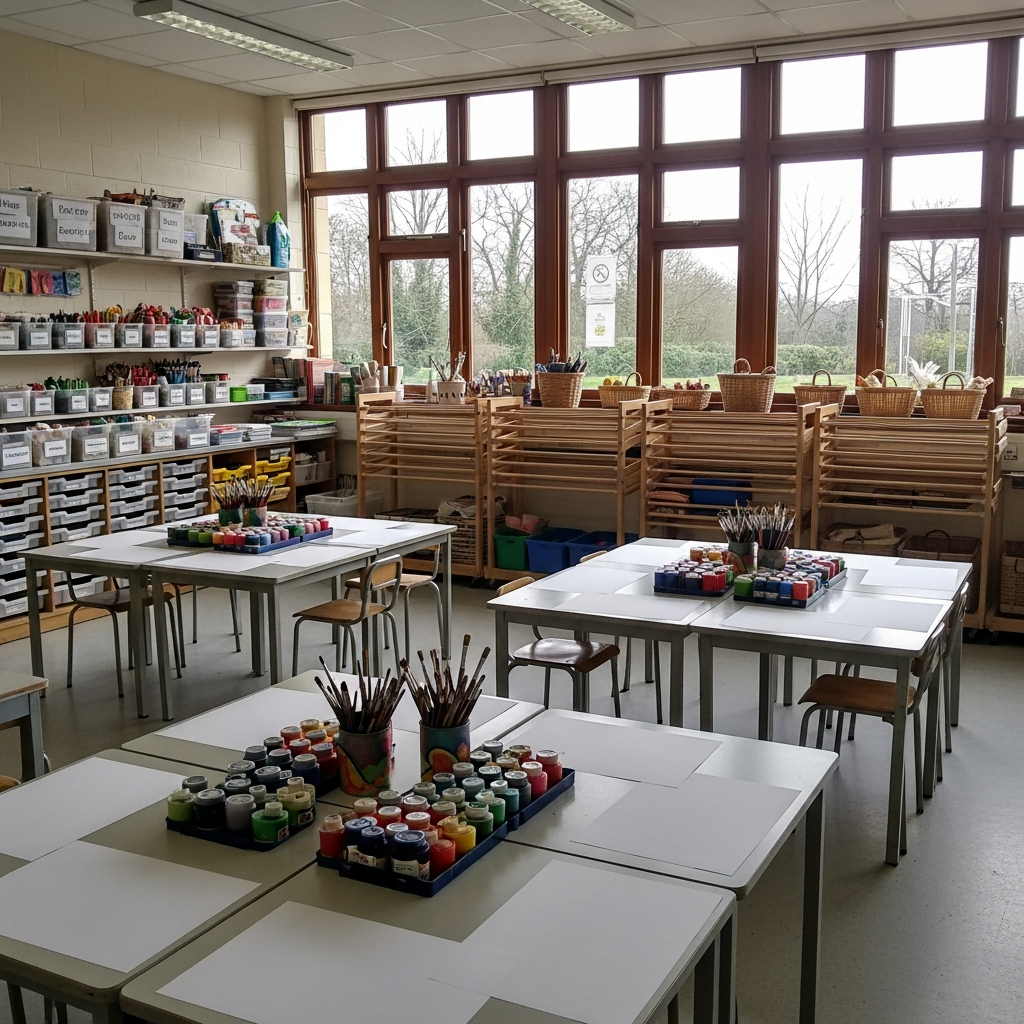
Best Budget-Friendly After-School Art Classes for 5–11 Year Olds Across the UK
Finding an after-school art class that is affordable, safe and genuinely enriching can feel overwhelming. Many UK parents worry about:
- Paying for a club that turns out to be little more than colouring sheets
- Unqualified staff or poor safeguarding
- Hidden costs for materials, shows or trips
- Whether art clubs really support confidence, social skills and long-term development
This guide is written specifically for UK parents of 5–11 year olds who want budget-friendly after-school art classes that are also high quality and well run. It draws on UK education practice, Ofsted expectations, and what typically works best for primary-aged children.
We’ll cover:
- Typical UK costs and how to judge value
- What good art provision looks like for 5–11s
- Safeguarding, Ofsted and staff qualifications
- SEND inclusion and accessibility
- Questions to ask on a club visit
- Red flags to watch for
- Practical checklists you can use immediately
1. Why After-School Art Classes Matter for 5–11 Year Olds
Art clubs are often seen as a “nice extra”, but for many children they are central to their wellbeing and development, especially in the primary years.
1.1 Key benefits for primary-aged children
For 5–11 year olds, a good after-school art class can:
- Build confidence – Children see their ideas valued, not just their test scores.
- Support emotional regulation – Drawing, painting and making can help children unwind after a structured school day.
- Develop fine motor skills – Cutting, sticking, sculpting and detailed drawing all strengthen hand muscles and coordination.
- Boost creativity and problem-solving – Children experiment, make mistakes and try again in a low-stakes environment.
- Encourage perseverance – Longer projects teach children to stick with something and see it through.
- Support language development – Talking about their work, describing colours, textures and stories.
- Build social skills – Sharing materials, collaborating on group pieces, giving and receiving feedback kindly.
1.2 Why after-school, not just in-class art?
Many UK primary schools have limited curriculum time for art due to pressure on English and maths. After-school art clubs can:
- Offer longer, more relaxed sessions than a 45-minute lesson
- Allow for messier, more ambitious projects (e.g. clay, printing, large-scale work)
- Give children who love art a chance to go deeper and build a portfolio over time
For children who struggle academically, an art club can be a place where they shine, which can spill over into improved self-esteem in class.
2. What Does “Budget-Friendly” Really Mean in the UK Context?
“Budget-friendly” doesn’t always mean “cheapest”. It means good value for money given your family’s budget and your child’s needs.
2.1 Typical UK price ranges (2024–2025)
Costs vary by region, venue and provider type, but for after-school art clubs for 5–11s you might typically see:
-
School-based art club (run by staff or external provider)
- £4–£10 per 60–90 minute session
- Often booked in half-term or termly blocks
-
Community centre / church hall art club
- £5–£12 per session
- Sometimes pay-as-you-go, sometimes block bookings
-
Private art studio / specialist provider
- £8–£18 per session
- Usually higher quality materials and smaller groups
-
Holiday art camps (not after-school, but useful comparison)
- £25–£60 per day depending on region and provider
London and the South East are usually at the upper end of these ranges; parts of the North, Midlands, Wales, Northern Ireland and Scotland may be lower.
2.2 Hidden costs to watch for
When comparing prices, ask specifically about:
- Materials – Are all materials included? Are there extra charges for clay, canvases or specialist items?
- Registration or membership fees – Some providers add a one-off joining fee.
- Showcases or exhibitions – Are there charges for end-of-term shows, frames or printed photos of artwork?
- Snacks – Are snacks included or do children bring their own?
- Late collection fees – What happens if you’re delayed?
- Sibling discounts – Are there reductions for more than one child?
A club that looks cheap but charges extra for materials and events can end up more expensive than a slightly pricier, all-inclusive option.
2.3 Signs of good value (even if not the very cheapest)
A budget-friendly club should offer:
- Clear, transparent pricing with no surprises
- High-quality materials (not just felt tips and photocopied sheets)
- Thoughtful planning – sessions build skills over time
- Safe ratios and trained staff
- Evidence of children’s progress – displays, portfolios, photos (shared with consent)
If a club is slightly more expensive but offers excellent safeguarding, skilled staff and rich activities, it may be better value than a cheaper but poorly run option.
3. Types of After-School Art Classes Across the UK
Understanding the different types of providers helps you compare like-for-like.
3.1 School-based art clubs
These are clubs that run on school premises, usually straight after the school day.
They may be:
- Run by school staff (teachers, TAs, HLTA)
- Run by an external art provider hired by the school
- Run by the school’s wraparound care provider with an art focus
Pros:
- Familiar environment for your child
- No extra travel or pick-up logistics
- Often cheaper than external studios
- School safeguarding procedures usually apply
Considerations:
- Quality can vary depending on staff expertise and resources
- May be more limited in materials (e.g. no clay kilns, limited storage)
- Places can be oversubscribed
3.2 Community and charity-run art clubs
These run in community centres, church halls, libraries or youth centres.
They may be:
- Run by local charities or arts organisations
- Funded partly by grants, making them more affordable
- Targeted at specific groups (e.g. low-income families, SEND, local estates)
Pros:
- Often very affordable or subsidised
- Strong community feel
- May offer sliding-scale fees or bursaries
Considerations:
- Quality and safeguarding can vary – you must check policies carefully
- Venues may be shared with other groups, so storage and displays can be limited
3.3 Private art studios and specialist providers
These are dedicated art spaces or businesses that run clubs in various venues.
Pros:
- Usually strong art expertise and better materials
- Often smaller groups and more structured progression
- May offer specialist areas (printmaking, textiles, digital art)
Considerations:
- Typically more expensive
- Travel and parking may be an issue
- Not always Ofsted-registered (more on this later)
3.4 Online or hybrid art clubs
Some providers offer online after-school art sessions via video platforms.
Pros:
- No travel; accessible from home
- Can be good for rural families or children with anxiety
Considerations:
- You usually supply your own materials
- Harder to supervise group dynamics and behaviour online
- Safeguarding must be very carefully managed
For 5–11 year olds, in-person clubs are generally better for social skills, confidence and practical support, but online can be a useful supplement.
4. What High-Quality Art Provision Looks Like for 5–11s
A good after-school art class is much more than keeping children busy with pens and paper.
4.1 Age-appropriate structure
For primary-aged children, look for:
- Clear start and end routines – register, introduction, tidy-up, reflection
- Short demonstrations – showing techniques without long lectures
- Choice within structure – a theme or skill focus, but room for individual ideas
- Time to finish – projects that can be completed or continued next week
5–7 year olds (Key Stage 1) need:
- Shorter bursts of activity
- Lots of sensory exploration (textures, colours, big movements)
- Simple tools and clear visual examples
8–11 year olds (Key Stage 2) can handle:
- Longer projects over several weeks
- More detailed techniques (shading, perspective, mixed media)
- Discussions about artists, styles and art vocabulary
4.2 Variety of materials and techniques
Over a term, you might expect children to experience a mix of:
- Drawing (pencils, charcoal, pastels)
- Painting (watercolour, poster paint, acrylics on card or canvas)
- Collage and mixed media
- Printmaking (e.g. foam printing, mono-printing)
- 3D work (clay, salt dough, cardboard sculpture)
- Textiles (simple sewing, weaving, fabric collage)
A club that only ever offers colouring sheets and felt tips is not offering rich art learning, even if children enjoy it.
4.3 Child-led creativity vs. “Pinterest-perfect” projects
Beware of clubs where every child’s artwork looks identical at the end.
High-quality art provision:
- Encourages children to make choices about colours, composition and subject
- Values process over product – the learning and experimenting matter more than a perfect outcome
- Displays a range of styles and outcomes, not just neat, adult-directed pieces
Ask to see examples of children’s work. Do they all look the same, or can you see individual personalities coming through?
4.4 Emotional safety and encouragement
Children should feel:
- Safe to make mistakes
- Comfortable asking for help
- Proud of their efforts, not just the “best” pieces
Listen to how staff talk about children’s work. Do they say things like:
- “Tell me about this part – what were you thinking here?”
- “I love how you tried a new technique today.”
…or do they focus on neatness and staying inside the lines?
5. Safeguarding, Ofsted and Legal Basics for Art Clubs
Safeguarding is non-negotiable. A club can be cheap and creative, but if safeguarding is weak, it is not safe.
5.1 Ofsted registration – when is it required?
In England, an after-school art club may or may not need to be Ofsted-registered, depending on:
- Age of children – 5–7 vs 8+
- Hours of operation – how many hours per day and per week
- Type of provision – childcare vs activity-specific coaching
Broadly:
- If a club provides regular childcare for under-8s for more than 2 hours a day, it is often required to register with Ofsted (or be exempt under specific conditions).
- Many school-based clubs operate under the school’s existing registration and safeguarding framework.
- Some activity-based clubs (like specialist art or sports coaching) may be exempt if parents remain on site or if the focus is instruction rather than childcare.
Always ask:
- “Are you Ofsted-registered, or operating under the school’s registration?”
- “If not registered, what exemption applies?”
In Scotland, Wales and Northern Ireland, different regulators apply (e.g. Care Inspectorate, CIW, HSC). The principles are similar: regular childcare usually requires registration.
5.2 Core safeguarding expectations
Regardless of registration status, you should expect:
- A written safeguarding / child protection policy
- A named Designated Safeguarding Lead (DSL) or equivalent
- DBS checks (or PVG/Access NI in devolved nations) for staff and regular volunteers
- Clear arrival and collection procedures (who can collect, passwords, late collection)
- Procedures for first aid and accidents
- A clear behaviour policy
Ask to see these policies or at least a summary. A reputable provider will not be offended.
5.3 Ratios and supervision
For 5–11 year olds, typical safe ratios are around:
- 1 adult to 8–10 children for art activities in a single room
Younger children, complex activities (e.g. tools, glue guns) or SEND needs may require lower ratios.
Red flags:
- One adult with 20+ children
- Children frequently left unsupervised in another room
- Staff distracted by phones or admin during sessions
5.4 Health and safety in art activities
Art can involve sharp tools, hot glue, messy materials and potential allergens.
Look for:
- Risk assessments for activities (e.g. cutting tools, clay dust, aerosols)
- Non-toxic, child-safe materials
- Clear rules about not putting materials in mouths
- Handwashing facilities
- Safe storage of sharp tools and solvents
Ask:
- “How do you risk assess new activities?”
- “What first aid training do staff have?”
6. Staff Qualifications and Experience: What’s Reasonable to Expect?
Parents often assume art clubs are run by qualified art teachers, but this isn’t always the case.
6.1 Ideal staff backgrounds
For a high-quality, budget-friendly art club, you might see:
- Qualified teachers (QTS) with primary or art specialism
- Art graduates or practising artists with experience of working with children
- Teaching assistants / HLTAs with strong art skills and training
- Youth workers with arts training
Not every staff member needs to be a qualified teacher, but there should be:
- At least one experienced lead practitioner with strong child development and behaviour management skills
- Staff who understand how 5–11 year olds learn and can adapt activities accordingly
6.2 Training and ongoing development
Ask about:
- Safeguarding training (how often, what level)
- First aid qualifications
- Any art-specific CPD (courses, workshops, networks)
A good provider will talk confidently about how they keep staff skills up to date.
6.3 Volunteers and older helpers
Some clubs use volunteers or older students as helpers.
This can be positive if:
- They are never left in sole charge of children
- They are supervised and briefed on safeguarding
- Parents are informed about who is working with their child
Red flag: A club heavily reliant on untrained volunteers with minimal oversight.
7. How Art Clubs Support Confidence, Resilience and Social Skills
Parents often underestimate how powerful a good art club can be for emotional and social development.
7.1 Confidence and self-esteem
Art clubs can:
- Give children a sense of identity beyond academic labels
- Provide visible evidence of progress – they can see their skills improve
- Offer safe risk-taking – trying new techniques without fear of failure
Children who are shy or anxious often find it easier to express themselves through art than through words.
7.2 Resilience and growth mindset
Good art teaching normalises:
- Making mistakes
- Starting again
- Trying a different approach
Staff might say things like:
- “What could you try next?”
- “This is how artists learn – by experimenting.”
This builds a growth mindset that can transfer to schoolwork.
7.3 Social skills and collaboration
Art clubs can support:
- Turn-taking and sharing materials
- Giving and receiving feedback kindly
- Collaborative projects (murals, group sculptures, joint displays)
Look for clubs that:
- Encourage children to talk about each other’s work respectfully
- Have clear rules about kindness and respect
- Celebrate effort and creativity, not just the most polished pieces
8. SEND Inclusion and Accessibility in Art Clubs
Many children with special educational needs and disabilities (SEND) thrive in art-based environments, but only if clubs are genuinely inclusive.
8.1 What inclusive practice looks like
An inclusive art club will:
- Ask about your child’s needs on the registration form
- Offer a pre-visit or phone call to discuss adjustments
- Be willing to adapt activities (e.g. larger tools, simplified steps, sensory alternatives)
- Provide visual supports – picture schedules, step-by-step images
- Allow movement breaks and quiet spaces if needed
8.2 Physical accessibility
Check:
- Step-free access to the room
- Accessible toilets
- Table heights and seating options
- Space for mobility aids
If the club is in an older building (e.g. church hall), ask specifically about ramps, lifts and accessible toilets.
8.3 Sensory considerations
Art can be sensory-rich – great for some children, overwhelming for others.
Ask:
- “How do you support children who are sensitive to noise, smells or textures?”
- “Can my child opt out of certain materials if they find them difficult?”
Good providers will:
- Offer alternative materials (e.g. dry media instead of messy paint)
- Keep noise levels managed
- Allow ear defenders or quiet corners
8.4 One-to-one support and funding
Most budget-friendly clubs cannot provide full-time 1:1 support unless funded.
Ask:
- “Can my child attend with their existing 1:1 support worker?”
- “Do you have experience with children with [autism/ADHD/physical disabilities/etc.]?”
Some local authorities or charities may offer short breaks funding or support for inclusive clubs – check your council’s Local Offer.
9. Regional and Borough Differences Across the UK
Provision and pricing can vary significantly by region and even by borough.
9.1 England – London vs other regions
-
London boroughs often have:
- Higher prices (£8–£15 per after-school session common)
- More specialist providers and private studios
- Some borough-funded schemes offering subsidised places for low-income families
-
Other English regions (North West, North East, Midlands, South West, East) may have:
- Lower average prices (£4–£9 per session)
- Fewer private studios but strong community arts organisations
Check your local council website for:
- Holiday and after-school activity schemes
- Targeted support (e.g. HAF – Holiday Activities and Food – sometimes extends to after-school pilots)
9.2 Scotland, Wales and Northern Ireland
- In Scotland, look for community arts projects supported by Creative Scotland or local authorities.
- In Wales, local councils and arts organisations often run bilingual or Welsh-medium arts projects.
- In Northern Ireland, community centres and cross-community arts projects can offer low-cost clubs.
Regulation of childcare differs, but the questions you ask about safeguarding, staff and quality remain the same.
9.3 Rural vs urban considerations
- Urban areas – more choice, but higher prices and waiting lists.
- Rural areas – fewer providers, but sometimes excellent community-led clubs.
If local options are limited, consider:
- Online art clubs combined with home materials
- Forming a parent co-op and hiring an artist/educator to run a weekly session in a village hall
10. Visiting a Club: What to Look For and What to Ask
Whenever possible, visit in person before committing to a term.

10.1 First impressions of the environment
Notice:
- Is the room clean, safe and reasonably organised?
- Are materials accessible but safely stored?
- Are there examples of children’s artwork on display?
- Does the space feel welcoming and child-friendly?
It doesn’t need to be fancy, but it should feel cared for and purposeful.
10.2 Questions to ask the provider
You might say:
-
About structure and content
- “What does a typical session look like for this age group?”
- “How do you plan progression over a term?”
-
About staff and safeguarding
- “Who will be leading the sessions, and what is their background?”
- “What safeguarding training do staff have?”
- “What are your ratios for this age group?”
-
About behaviour and inclusion
- “How do you manage behaviour and support children who are anxious or shy?”
- “How do you support children with SEND?”
-
About practicalities and costs
- “Is everything included in the price, or are there extra charges for materials or events?”
- “What is your policy on cancellations, missed sessions and late collection?”
-
About communication with parents
- “How do you share what the children have been doing?”
- “Can I see examples of previous projects?”
10.3 Observing a session (if allowed)
If you’re invited to observe (even briefly), look for:
- Children engaged and mostly on-task
- Staff moving around, supporting and encouraging
- Clear routines for tidying up and transitions
- A calm, positive atmosphere, even if it’s busy and a bit messy
Red flags:
- Children wandering aimlessly, not sure what to do
- Staff shouting or using shaming language
- Long periods of children waiting with nothing to do
11. Red Flags: When to Think Twice or Walk Away
Even if a club is cheap and convenient, some warning signs should make you cautious.
11.1 Safeguarding and supervision concerns
- No clear answer when you ask about DBS checks or safeguarding policies
- Children allowed to leave the room unsupervised (e.g. to toilets in another part of the building) without clear procedures
- No secure system for collection – children just “released” at the door
11.2 Poor behaviour management
- Staff frequently shouting or using humiliation (“Look at X, they’re doing it properly, why can’t you?”)
- No clear rules or routines – chaos at tidy-up time
- Bullying or unkindness not addressed
11.3 Low-quality or unsafe art provision
- Only colouring sheets week after week
- Very limited materials despite high fees
- Use of unsafe tools or materials without proper supervision
- No risk assessments for messy or complex activities
11.4 Lack of transparency
- Vague about costs, policies or staff backgrounds
- Reluctant to let you see the space or examples of children’s work
- No written information or policies available
If several of these red flags appear together, it’s reasonable to look elsewhere, even if the club is convenient.
12. Budgeting Smartly: Keeping Costs Down Without Compromising Quality
You don’t have to choose between quality and affordability. With some planning, you can often find a good balance.
12.1 Compare cost per hour, not just per session
A £9, 90-minute session may be better value than a £6, 45-minute one.
Work out:
- Session length
- Number of sessions per term
- Total cost per term
Then compare cost per hour across providers.
12.2 Ask about discounts and support
Many providers offer:
- Sibling discounts (e.g. 10–20% off for additional children)
- Early-bird booking discounts
- Low-income or pupil premium discounts (especially if linked to a school)
If your child receives Free School Meals, Pupil Premium, or has an EHCP, ask if there are subsidised places.
12.3 Mix and match provision
You might:
- Choose a higher-quality art club once a week
- Combine it with free or low-cost creative activities at home or in the community (libraries, museums, online resources)
This way, your child still gets rich art experiences without multiple expensive clubs.
12.4 Watch out for long-term contracts
Be cautious about:
- Providers insisting on year-long contracts with no break clause
- Large upfront payments with no refund policy if your child doesn’t settle
A reasonable compromise is:
- A half-term trial block
- Clear information about notice periods
13. Supporting Your Child’s Art Journey at Home (On a Budget)
Even the best club is only a few hours a week. You can support your child’s creativity at home without spending a fortune.
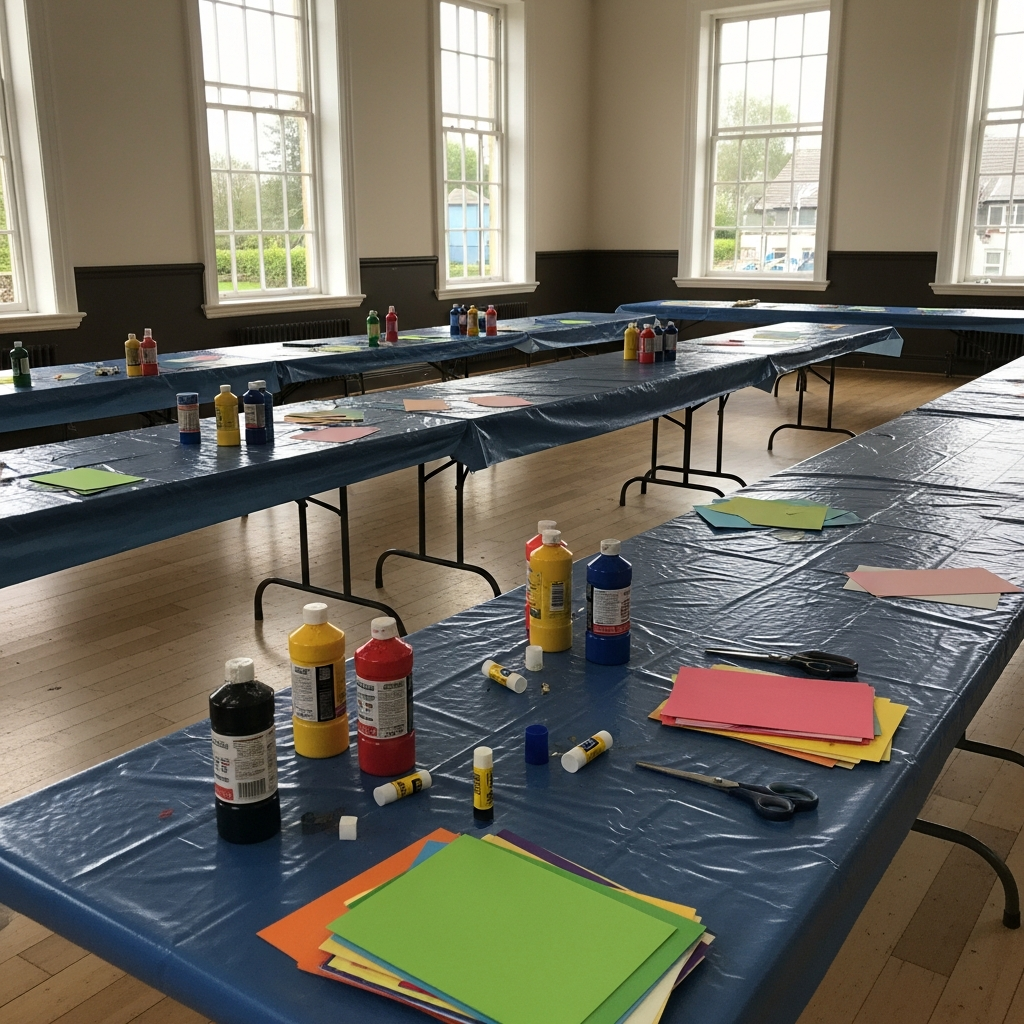
13.1 Simple, affordable home art setup
You don’t need a studio. A plastic box under the table can hold:
- A4 and A3 paper (cheap printer paper plus some thicker card)
- Pencils, crayons, felt tips
- Glue sticks and child-safe PVA
- Safety scissors
- Recycled materials (cardboard boxes, tubes, magazines)
Add extras over time:
- Watercolour paints and brushes
- Oil pastels or chalk pastels
- A cheap tablecloth or oilcloth for mess
13.2 Linking home and club learning
Ask your child:
- “What did you enjoy most at art club this week?”
- “Is there anything you’d like to try again at home?”
You might:
- Keep a folder or portfolio of their favourite pieces
- Take photos of 3D work before it gets recycled
- Visit local galleries or exhibitions and talk about what you see
13.3 Encouraging without pressure
Focus on:
- Effort: “You worked really carefully on that shading.”
- Choices: “I like the colours you chose – what made you pick those?”
- Feelings: “How did it feel to make this?”
Avoid:
- Comparing siblings or friends
- Over-correcting (“That’s not how a tree looks”) – let them explore
14. Practical Checklists for Parents
Use these checklists when shortlisting and visiting clubs.
14.1 Quick shortlist checklist
When looking at websites or flyers, can you easily find:
- Clear age range (5–11, KS1/KS2)
- Session days and times
- Location and pick-up arrangements
- Price per session and per term
- Whether materials are included
- Basic information about staff and their experience
- A mention of safeguarding or child protection
If several of these are missing, ask for more information before booking.
14.2 In-depth visit checklist
During a visit or trial session, look for:
Environment
- Clean, safe, reasonably organised space
- Age-appropriate tables and chairs
- Accessible toilets and handwashing
- Artwork displayed that shows variety and individuality
Staff and interactions
- Warm, respectful tone with children
- Clear explanations and demonstrations
- Staff moving around, supporting children
- Calm responses to behaviour issues
Activities
- Variety of materials available
- Children making choices about their work
- Balance of guidance and freedom
- Evidence of planning (not just “do what you like” every week)
Safety and safeguarding
- Secure arrival and collection procedures
- Clear rules about tools and materials
- First aid kit visible or easily accessible
- Staff can explain safeguarding arrangements confidently
14.3 SEND and additional needs checklist
If your child has SEND or additional needs, ask:
- “Have you supported children with similar needs before?”
- “How would you adapt activities for my child?”
- “Can my child visit the space beforehand?”
- “Are there quieter areas if they feel overwhelmed?”
- “Can we review after a few sessions and adjust if needed?”
15. Example UK Scenarios and How to Decide
Sometimes it helps to see how these principles play out in real-life style situations.
15.1 Scenario A: The cheap school club vs the pricier studio
- Option 1: School-based club, £4 per session, run by a TA. Mostly drawing and colouring, limited materials, large group (25 children, 2 adults).
- Option 2: Local art studio, £10 per session, 10 children, 2 staff (one is a qualified art teacher). Wide range of materials, structured projects, clear safeguarding.
If your budget allows only one, consider:
- Does your child love art and want to develop real skills? The studio may be better value.
- Is your child mainly looking for a fun, social hour after school and you need affordable childcare? The school club may be sufficient, provided safeguarding is sound.
15.2 Scenario B: Child with autism starting a new club
Your 8-year-old is autistic, loves drawing, but struggles with noise and transitions.
You might:
- Email the provider with a brief outline of your child’s needs
- Ask for a short pre-visit to see the room when it’s quiet
- Request visual supports (e.g. a simple picture schedule of the session)
- Start with a shorter stay (e.g. 45 minutes) and build up
If the provider is open, flexible and keen to work with you, that’s a strong positive sign.
15.3 Scenario C: Limited budget, creative child
You can afford one paid club per week.
You might:
- Choose a mid-priced, well-run art club once a week
- Use free resources at home:
- Library books on drawing and artists
- Free online tutorials (with supervision)
- Local gallery free days
This combination can give your child rich art experiences without multiple expensive clubs.
16. Frequently Asked Questions from UK Parents
16.1 Does my child need to be “good at art” to join a club?
No. A good club welcomes all abilities and focuses on enjoyment and growth, not talent. Many children discover a love of art only after trying a club.
16.2 How many children in a group is too many?
For 5–11s, more than 15–20 children with only one adult is a concern, especially with messy or tool-based activities. Look for 1:8–10 ratios as a guide.
16.3 Should I worry if the club isn’t Ofsted-registered?
Not necessarily. Some activity-based clubs are legitimately exempt. What matters is that they can explain:
- Why they are exempt
- How they ensure safeguarding, safety and quality
If they are vague or defensive, that’s a concern.
16.4 What if my child wants to quit after a couple of sessions?
- Talk to your child about what’s not working – is it the activity, the group, the timing?
- Speak to the provider – can they adapt anything or offer a trial extension?
- Check the refund or notice policy you agreed to.
Sometimes it’s worth encouraging them to finish the half-term, but if there are safeguarding or serious wellbeing concerns, prioritise your child’s safety and mental health.
16.5 Can art clubs help with anxiety or low confidence?
Yes, many children find art a safe outlet. Look for:
- Smaller groups
- Calm, encouraging staff
- Clubs that emphasise process, not perfection
You can also let staff know (briefly) about your child’s needs so they can support sensitively.
17. Summary and Next Steps for Parents
Choosing a budget-friendly after-school art class for your 5–11 year old is about more than price. The best clubs combine:
- Strong safeguarding and clear procedures
- Skilled, caring staff who understand children and art
- Rich, varied activities that build skills over time
- Inclusive practice for children with a range of needs
- Transparent, fair pricing with minimal hidden costs
Your next steps might be:
- List 3–5 local options – school-based, community and private.
- Use the shortlist checklist to narrow them down.
- Arrange visits or trial sessions where possible.
- Talk to your child about what they enjoy and what feels comfortable.
- Review after a half-term – is your child happy, safe and growing in confidence?
You know your child best. With the right questions and a clear sense of what good looks like, you can find an after-school art class that fits your budget, supports your child’s development, and gives them a space to create, relax and thrive after the school day.