Beginner Rugby Clubs for Primary School Children in England: What Parents Need to Know Before Signing Up
Beginner Rugby Clubs for Primary School Children in England: What Parents Need to Know Before Signing Up
Rugby can be a brilliant sport for primary-aged children in England: it builds confidence, resilience, teamwork and physical literacy. But it also raises understandable worries for parents – especially around safety, contact, head injuries, and the quality of coaching.
This guide is written for parents who want clear, practical, UK-specific advice before committing to a beginner rugby club or after-school rugby session. It focuses on England, but much of the guidance will feel familiar across the UK.
We will look at:
- How rugby is taught safely to primary children
- The difference between tag, touch and contact rugby
- What good coaching and safeguarding look like
- Typical costs and hidden extras
- How to compare school-based clubs, community clubs and private providers
- Questions to ask on a visit – and red flags to watch for
- How rugby can support confidence, behaviour and social skills
- What to consider for children with SEND or additional needs
1. Understanding Rugby for Primary School Children in England
1.1 Tag, touch and contact rugby – what’s appropriate at primary age?
For primary-aged children in England, most beginner rugby is non-contact. The three main formats you will hear about are:
-
Tag rugby
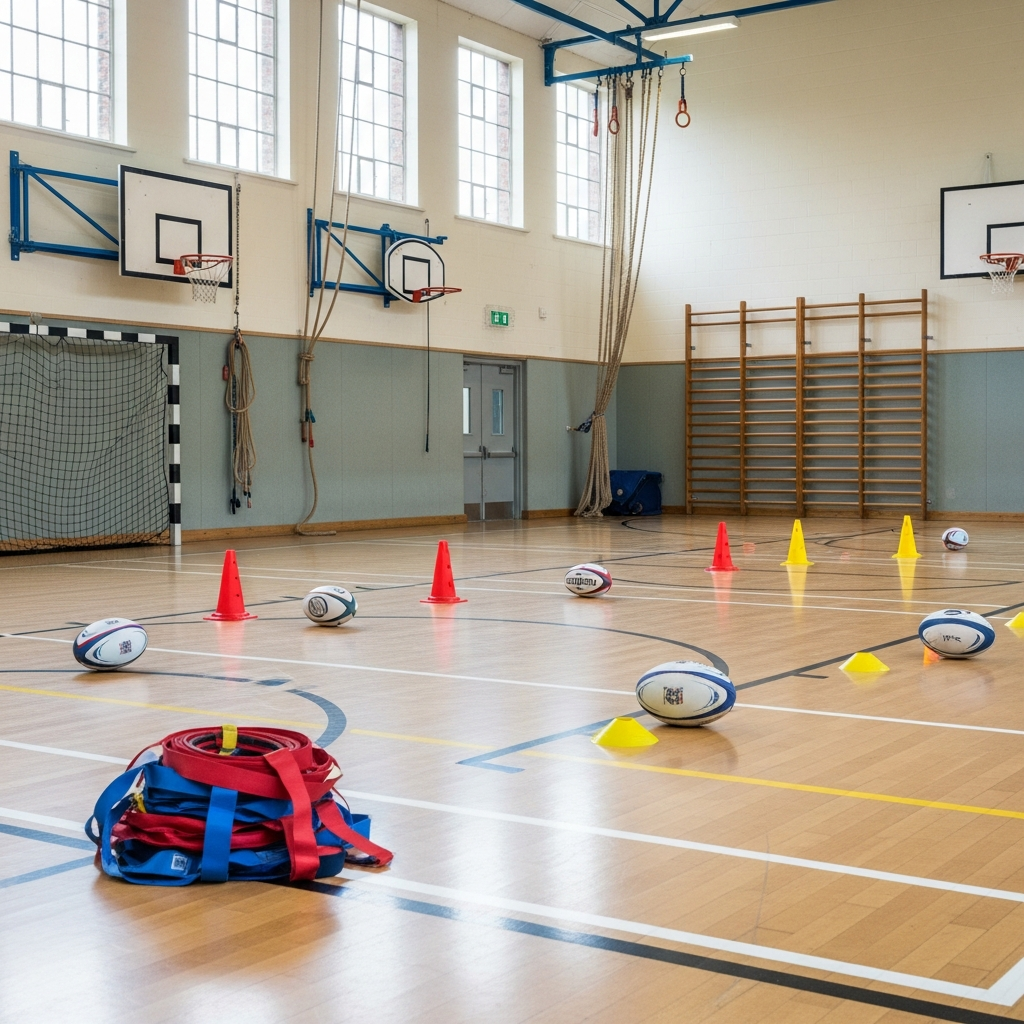
- Children wear belts with Velcro tags.
- Instead of tackling, defenders pull off a tag.
- No scrums, rucks, mauls or lineouts.
- Very common in KS1 and lower KS2 (Years 1–4).
-
Touch rugby
- Players are “tackled” by a light touch on the body or clothing.
- Often used with slightly older children (upper KS2) as a step towards understanding space, passing and game structure.
-
Contact rugby
- Involves tackling, rucks, mauls and scrums.
- The Rugby Football Union (RFU) has age-grade rules that phase in contact elements gradually from around U9/U10 in community clubs, with strict safety frameworks.
- Many primary after-school clubs do not offer full contact; they focus on tag or touch.
When you see a club advertised for primary children, always ask:
- Is it tag, touch or contact?
- At what age (if at all) do they introduce contact?
- How do they teach safe tackling and falling techniques?
1.2 Governing bodies and frameworks you should know
In England, rugby is mainly overseen by:
- RFU (Rugby Football Union) – governs rugby union, which is what most school and community clubs play.
- RFL (Rugby Football League) – governs rugby league, more common in parts of the North of England.
For primary after-school clubs, you are most likely dealing with RFU-aligned programmes. Look for:
- References to RFU Age Grade Rugby or Kids First Rugby
- Coaches with RFU coaching qualifications
- Clubs affiliated to the RFU (you can check via the RFU website)
This matters because RFU-affiliated clubs must follow specific rules on:
- Age-appropriate contact
- Concussion management
- Safeguarding and DBS checks
- Coach education and ratios
2. Benefits of Rugby for Primary-Aged Children
2.1 Physical development
Rugby, even in tag form, supports:
- Fundamental movement skills – running, dodging, stopping, starting, changing direction
- Coordination – catching, passing, kicking
- Strength and balance – especially when learning safe body positions
- Cardiovascular fitness – lots of short sprints and active play
For children who are less confident in traditional PE, tag rugby can feel more like a game than a “sport”, which can reduce anxiety.
2.2 Confidence and resilience
Rugby culture in England, especially at junior level, often emphasises:
- “Have a go” mindset – mistakes are part of learning
- Resilience – getting back up after a missed pass or dropped ball
- Positive risk-taking – trying a new skill or position
Children who struggle with perfectionism or fear of failure can benefit from a sport where everyone makes visible mistakes and the game simply carries on.
2.3 Social skills and teamwork
Rugby is inherently team-based. Good beginner clubs will:
- Rotate positions so children experience different roles
- Encourage communication (“Pass left!”, “Support behind!”)
- Teach respect for rules and referees
- Emphasise supporting teammates rather than blaming
This can be particularly helpful for children who:
- Find it hard to share or take turns
- Need structured opportunities to make friends
- Benefit from clear routines and expectations
2.4 Behaviour, focus and emotional regulation
Many parents report improvements in:
- Listening skills – following multi-step instructions in drills
- Self-control – waiting for a whistle, stopping on command
- Emotional regulation – coping with losing, frustration or perceived unfairness
A well-run rugby club will explicitly teach these skills, not just assume they will appear.
3. Safety: How Risky Is Rugby for Primary Children?
3.1 Tag vs contact: realistic risk levels
For tag rugby in primary school:
- The risk of serious injury is low, similar to other running games.
- Most injuries are minor: grazes, bumps, occasional twisted ankles.
For contact rugby (usually older primary, in community clubs):
- There is a higher risk of injury, including concussion.
- However, RFU Age Grade Rugby rules are designed to reduce impact and phase in contact gradually.
If your child is in KS1 or lower KS2, any beginner club should almost certainly be non-contact. If a provider is offering full contact to very young children, treat this as a major red flag.
3.2 Concussion and head injury
Concussion is a serious concern in rugby. For primary-age beginners:
- In tag rugby, head injury risk is very low but not zero (collisions can still happen).
- In contact rugby, risk is higher, but clubs should follow strict RFU concussion protocols.
Ask the club:
- How do you recognise and respond to suspected concussion?
- Do you follow RFU Headcase guidance?
- What is your return-to-play protocol after a head injury?
- How do you communicate with parents and schools if a head injury occurs?
Any hesitation or vague answers here are a concern.
3.3 Pitches, equipment and environment
Look for:
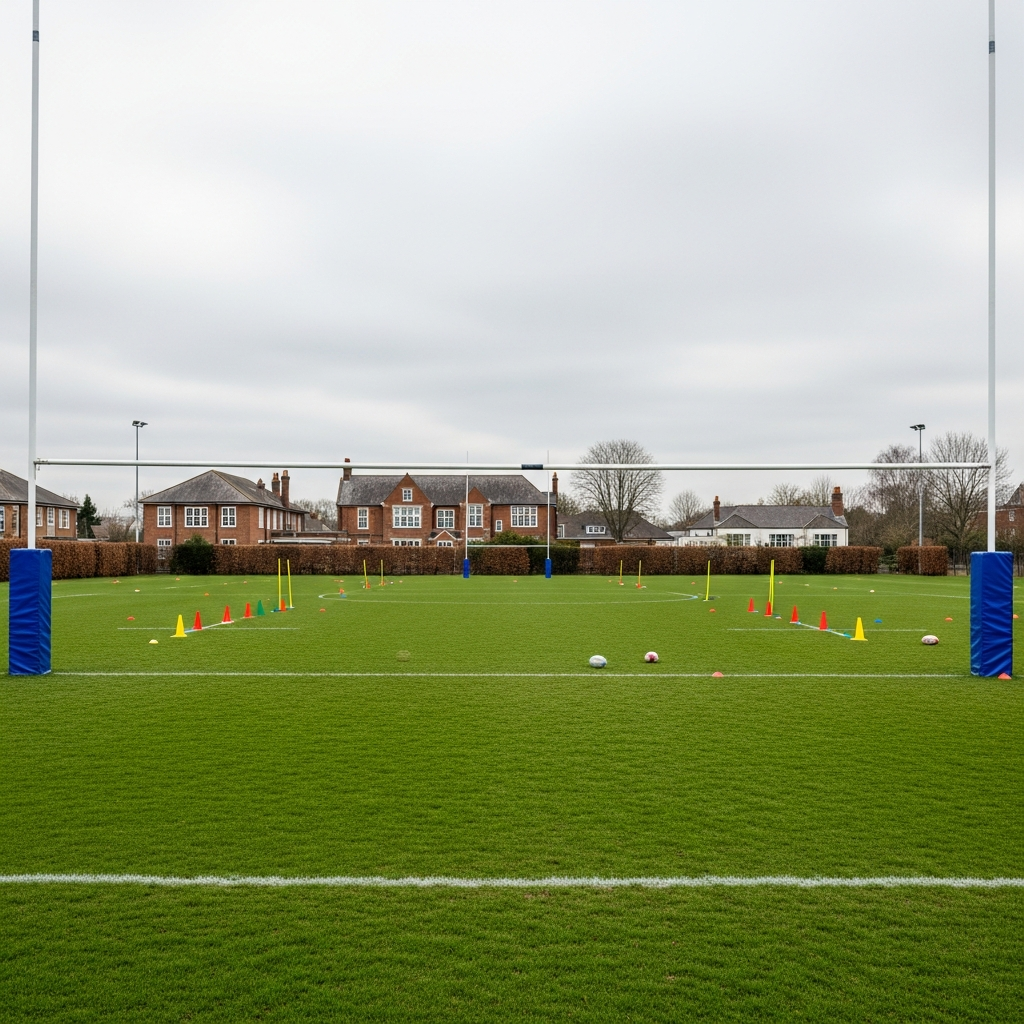
- Safe playing surface – grass or 3G/4G pitch, free of holes, glass or debris
- Clear boundaries – cones or lines marking the pitch
- Appropriate ball sizes – smaller balls for younger children (Size 3 or 4)
- Weather planning – clear policy for extreme heat, cold or heavy rain
If sessions are on a hard playground surface, ask how they adapt activities to reduce falls and collisions.
4. Safeguarding, Ofsted and Legal Responsibilities
4.1 When does Ofsted apply to rugby clubs?
This is an area that confuses many parents.
-
School-run after-school rugby clubs (delivered by school staff, on school premises, for enrolled pupils) usually fall under the school’s existing Ofsted registration and safeguarding framework.
-
External providers on school sites (e.g. a coaching company running a paid rugby club after school) may or may not be Ofsted-registered, depending on:
- The age of children
- Whether care is provided for under-8s for more than 2 hours a day
- Whether the main purpose is sport coaching or childcare
-
Community rugby clubs (e.g. local RFU club minis section) are typically not Ofsted-registered, because they are sports clubs, not childcare providers.
Lack of Ofsted registration does not automatically mean a club is unsafe, but it does mean you should pay extra attention to:
- Safeguarding policies
- Staff vetting and DBS checks
- Supervision ratios
- Complaints procedures
4.2 Safeguarding essentials you should expect
Regardless of Ofsted status, a reputable rugby club should have:
- A named Designated Safeguarding Lead (DSL) or Club Safeguarding Officer
- A written safeguarding policy, easily available on request or on their website
- Enhanced DBS checks for all coaches and regular volunteers
- A code of conduct for coaches, parents and players
- Clear procedures for:
- Reporting concerns
- Managing allegations against staff or volunteers
- Handling bullying or discriminatory behaviour
Ask directly:
- Who is your safeguarding lead and how can I contact them?
- Are all coaches and regular helpers DBS-checked?
- Can I see your safeguarding and behaviour policies?
4.3 Ratios and supervision
There is no single legal ratio for sports clubs, but good practice for primary-age rugby is typically:
- Around 1:8 for younger children (KS1)
- Around 1:10–12 for older primary (KS2)
Higher needs groups (e.g. many beginners, SEND, or mixed ages) may require more adults.
Check:
- How many children are in a typical session?
- How many coaches/assistants are present?
- What happens if a coach is unexpectedly absent?
5. Coaching Quality and Staff Qualifications
5.1 What qualifications should coaches have?
For beginner rugby in England, look for:
- RFU coaching qualifications, such as:
- England Rugby Coaching Award (ERCA) or newer equivalents
- Age Grade Rugby-specific training
- First Aid training – ideally a sports-specific or paediatric first aid course
- Safeguarding training – RFU safeguarding course or equivalent
For school-based clubs, some coaches may be PE specialists or qualified teachers with additional rugby training. For community clubs, many coaches are volunteers but should still be RFU-trained and DBS-checked.
5.2 Experience with primary-aged children
Rugby expertise alone is not enough. Ask about:
- Experience coaching primary age groups, not just teenagers or adults
- Training in behaviour management and positive discipline
- Understanding of child development and attention spans
A brilliant adult-level coach can be a poor fit for Year 2s if they cannot adapt their style.
5.3 Coaching style: what “good” looks like
During a visit or trial session, observe whether coaches:
- Use positive, specific praise (“Great low pass, you looked before you threw”)
- Give clear, simple instructions and demonstrate drills
- Keep children active, with minimal queuing or standing around
- Correct unsafe behaviour calmly and firmly
- Encourage inclusion – rotating teams, ensuring everyone gets the ball
Avoid clubs where coaches:
- Shout aggressively or use humiliation
- Allow rough play or dangerous tackles to go unchecked
- Focus only on the most talented children
- Use drills that are clearly too complex for the age group
6. Types of Beginner Rugby Provision in England
6.1 School-based after-school rugby clubs
These are usually:
- Run on school premises straight after the school day
- Delivered by school staff or external coaching companies
- Non-contact (tag or touch) for most primary ages
Pros:
- Convenient – no extra travel
- Familiar environment for children
- Often cheaper than private clubs
- Covered by school safeguarding framework if run internally
Cons:
- Shorter sessions (often 45–60 minutes)
- Limited progression if your child becomes very keen
- Quality can vary depending on the provider
6.2 Community rugby clubs (RFU-affiliated)
These are your local rugby union clubs, often with “minis and juniors” sections.
Pros:
- Strong rugby culture and pathway to older age groups
- RFU oversight and age-grade structure
- Social side for families (clubhouse, events)
Cons:
- Usually at weekends (Sunday mornings) plus some weekday training
- Travel required
- Can feel intimidating if you are new to rugby culture
6.3 Private coaching companies and holiday camps
Many multi-sports providers and specialist rugby companies offer:
- After-school clubs on school sites
- Weekend skills sessions
- Holiday camps
Pros:
- Flexible options and locations
- Often strong behaviour management systems
- May be Ofsted-registered if operating as childcare for under-8s
Cons:
- Quality varies widely between companies and even between coaches
- Can be more expensive than community clubs
7. Costs, Value for Money and Hidden Fees
7.1 Typical costs in England (2024–2025 ballpark)
Costs vary by region (London and the South East are usually higher), but as a rough guide:
-
School-based after-school rugby club:
- £4–£10 per session
- Often booked in half-term blocks (e.g. 6–7 weeks)
-
Community RFU club minis membership:
- £80–£200 per season (often includes training and matches)
- Some clubs offer sibling discounts or payment plans
-
Private weekend sessions or holiday camps:
- £8–£15 per session
- Holiday camps: £25–£45 per day, depending on location and hours
Always check what is included in the price.
7.2 Hidden or extra costs to ask about
Ask specifically about:
-
Kit requirements:
- For tag rugby: usually trainers/boots, sportswear, maybe a mouthguard if any contact drills are introduced.
- For contact rugby (usually older primary): boots, mouthguard, possibly headguard and shoulder pads (optional but common).
-
Club kit:
- Match shirts may be provided, but some clubs expect you to buy branded shorts, socks or training tops.
-
Registration fees:
- Some community clubs charge a one-off joining fee.
-
Tournaments and festivals:
- Check if there are extra costs for away fixtures or festivals.
-
Travel and parking:
- Particularly relevant in London boroughs or busy urban areas.
7.3 Financial support and discounts
Ask if the club offers:
- Sibling discounts
- Reduced fees for low-income families
- Payment by instalments
- Links to local authority or school hardship funds
Some schools and councils use Pupil Premium or Holiday Activities and Food (HAF) funding to subsidise places for eligible children.
8. What to Look For on a Club Visit

8.1 Before you go: questions to ask by email or phone
- What age groups do you cater for?
- Is the rugby tag, touch or contact for my child’s age?
- What qualifications do your coaches hold?
- Are all staff and volunteers DBS-checked?
- What are your safeguarding and concussion policies?
- How many children are in a typical session?
- Can my child attend a trial session before we commit?
8.2 During the visit: environment and organisation
Observe:
-
Arrival and registration:
- Are children signed in and out?
- Do staff check who is collecting each child?
- Is there a clear system for late collection?
-
Equipment and layout:
- Is equipment in good condition?
- Are pitches clearly marked?
- Is there a safe area for water bottles and bags?
-
General atmosphere:
- Do children seem engaged and mostly happy?
- Is there a balance of fun and structure?
- Are coaches approachable and calm?
8.3 Watching the coaching in action
Look for:
- Warm-up: age-appropriate, dynamic, not just laps of the pitch
- Clear demonstrations of skills
- Short, varied activities to match attention spans
- Inclusive grouping – not always picking the same children as captains or leaders
- Positive language – focusing on effort and improvement
Notice how coaches respond when:
- A child is struggling or anxious
- Two children argue or push
- A child is reluctant to join in
You want to see calm, consistent, respectful responses.
8.4 Communication with parents
Ask yourself:
- Do staff introduce themselves and explain the session structure?
- Are you told how to raise concerns or give feedback?
- Do they share what the children have been working on?
Clubs that value partnership with parents will be open and proactive in their communication.
9. Red Flags: When to Think Twice or Walk Away
9.1 Safety and safeguarding concerns
Treat these as serious warning signs:
- No clear sign-in/sign-out system
- Staff unsure who is collecting which child
- No visible first aid kit or named first aider
- Coaches dismissing head knocks as “just part of the game”
- No written safeguarding policy available
- Reluctance to discuss DBS checks
9.2 Poor coaching practice
Be wary if you see:
- Children standing around for long periods, bored or cold
- Coaches shouting aggressively or using sarcasm
- Favouritism – only the most able children getting the ball
- Unsafe drills – high contact for very young children, or no instruction on safe falling/tackling
- No adaptation for different ability levels
9.3 Organisational issues
Red flags include:
- Sessions regularly starting late or finishing early without explanation
- Last-minute cancellations with poor communication
- Confusion over fees, payment methods or refunds
- No clear policy for bad weather or pitch closures
If several of these issues appear together, consider alternative options.
10. Rugby and SEND: Inclusion, Adaptations and Questions to Ask
10.1 Can rugby work for children with SEND?
Yes – with the right environment and adaptations, rugby can be very positive for children with:
- Autism or social communication differences
- ADHD or attention difficulties
- Developmental coordination disorder (DCD/dyspraxia)
- Mild learning difficulties
- Speech and language needs
Benefits can include:
- Clear rules and routines
- Structured social interaction
- Opportunities to practise turn-taking and teamwork
- Sensory input through movement
10.2 What an inclusive rugby club looks like
Signs of good SEND practice:
- Coaches ask about your child’s needs in advance
- Willingness to adapt drills (e.g. smaller groups, visual cues)
- Acceptance of ear defenders, fidget tools or movement breaks
- Flexible expectations around eye contact or verbal responses
- Clear visual structure (cones, coloured bibs, picture schedules)
10.3 Questions to ask as a SEND parent
- Have you coached children with similar needs before?
- How do you support children who find noise, crowds or transitions difficult?
- Can my child have a parent or carer nearby at first?
- Are there quieter spaces if my child becomes overwhelmed?
- How do you manage behaviour in a way that is supportive, not punitive?
If a club seems defensive or dismissive about SEND, that’s a concern.
10.4 One-to-one support and reasonable adjustments
Clubs are expected to make reasonable adjustments under the Equality Act 2010, but they are not always funded to provide 1:1 support.
Discuss:
- Whether you can stay and support your child initially
- Whether the club can adjust group sizes or provide a key adult
- Any safety considerations (e.g. running off, lack of danger awareness)
Some families find it helpful to start with shorter sessions or quieter times before joining full groups.
11. Borough and Regional Differences Across England
11.1 London boroughs
In London, you may find:
- Higher session fees due to facility costs
- More private coaching companies operating in schools
- Limited grass pitches, with more use of 3G/4G surfaces
- Greater competition for places in popular clubs
Check:
- Travel time and parking or public transport options
- Whether sessions continue through winter or move indoors
11.2 Large cities (e.g. Birmingham, Manchester, Leeds)
Expect:
- A mix of strong community clubs and school-based provision
- Some areas with oversubscribed clubs and waiting lists
- Variation in quality between different providers and schools
Local Facebook parent groups or school WhatsApp groups can be useful for word-of-mouth feedback, but always cross-check with your own visit.
11.3 Rural and coastal areas
You may find:
- Fewer clubs, but strong community identity around the local rugby club
- More reliance on weekend community sessions than after-school clubs
- Longer travel distances, especially in more remote areas
Ask about:
- Lift-sharing or carpool options
- Weather policies for exposed coastal or high-ground pitches
12. Practical Checklists for Parents
12.1 Pre-sign-up checklist
Use this before committing to any beginner rugby club:
- I know whether the club offers tag, touch or contact rugby for my child’s age
- I have checked the club is RFU-affiliated (for community clubs) or has clear links to recognised bodies
- I have asked about coach qualifications, DBS checks and first aid
- I have seen or requested the safeguarding policy
- I understand the fees, payment schedule and any extra costs (kit, tournaments)
- I know the start/finish times and collection arrangements
- I have discussed any medical needs or SEND with the club
12.2 What to pack for a typical beginner rugby session
For most primary-age tag or touch rugby sessions:
- Comfortable sports clothing (layers for cold weather)
- Trainers or football/rugby boots (check surface requirements)
- Refillable water bottle
- Light waterproof jacket (for changeable weather)
- Named bag for belongings
- Any required medication (e.g. inhaler, EpiPen) clearly labelled
For older primary children in contact rugby:
- Mouthguard (essential)
- Boots suitable for the pitch type (check stud rules)
- Optional: headguard, shoulder pads (if allowed by the club and RFU rules)
12.3 After the first few sessions: reflection checklist
Ask yourself and your child:
- Does my child look forward to sessions most of the time?
- Do they talk about friends or teammates from the club?
- Do they feel safe and able to tell an adult if something is wrong?
- Have I seen consistent organisation and communication from the club?
- Do I feel comfortable raising concerns with the coaches?
If several of these answers are “no”, consider discussing with the club or exploring alternatives.
13. Balancing Rugby with Homework, Other Clubs and Family Life
13.1 Time and energy considerations
Rugby can be physically demanding, especially in colder months. Think about:
- How many evenings your child is already out at clubs
- Their typical energy levels after school
- Homework expectations from their school
For many primary children, one rugby session per week is a good starting point.
13.2 Managing tiredness and over-scheduling
Signs your child may be over-scheduled:
- Frequent meltdowns or tears before clubs
- Struggling to wake up for school
- Drop in school engagement or behaviour
If this happens, consider:
- Reducing to one term of rugby, then reviewing
- Alternating rugby with another club across terms
- Prioritising sleep and downtime on non-club days
13.3 Communicating with school
If your child is very enthusiastic about rugby but struggling with homework or fatigue:
- Talk to the class teacher about workload and possible adjustments
- Ask if rugby participation can be recognised as part of their physical activity or personal development
Schools are often supportive when they see a child thriving in a structured, positive activity.
14. Supporting Confidence and Social Skills Through Rugby
14.1 For shy or anxious children
Rugby can feel daunting for quieter children, but a good club will:
- Pair them with a buddy or small group
- Give them simple, achievable roles at first
- Allow gradual participation (e.g. joining warm-up before full games)
You can help by:
- Visiting the pitch or club area before the first session
- Practising simple passing in the garden or park
- Agreeing a signal they can use if they need a break
14.2 For very competitive or perfectionist children
Rugby offers a chance to learn:
- How to win and lose graciously
- That mistakes are shared and normal
- That effort and teamwork matter more than individual glory
Talk after sessions about:
- Times they encouraged a teammate
- How they handled a disappointment (e.g. losing a match)
- What they learned, not just the score
14.3 For children who struggle with behaviour
Rugby’s structure and clear rules can support children who:
- Find it hard to sit still in class
- Struggle with impulse control
A good coach will:
- Channel energy into clear tasks and short bursts of activity
- Use predictable consequences for unsafe behaviour
- Reinforce positive choices (“You stopped when I blew the whistle – that kept everyone safe”)
If your child has a behaviour plan at school, share key strategies with the coach.
15. Working with the Club: Communication, Feedback and Concerns
15.1 Building a positive relationship
You will get the best from a rugby club if you:
- Introduce yourself to coaches early on
- Share relevant information about your child (anxieties, medical needs, triggers)
- Keep them updated about any changes (new diagnosis, injury, family circumstances)
15.2 Raising concerns constructively
If something worries you:
- Note specific examples – dates, what was said or done.
- Arrange a calm conversation with the lead coach or safeguarding officer.
- Explain your concern and what you would like to see change.
- Give the club a chance to respond and improve.
If the issue is serious (e.g. safeguarding, bullying not addressed, unsafe practices) and not resolved:
- Follow the club’s formal complaints procedure
- For RFU clubs, you can contact the CB (Constituent Body) Safeguarding Manager
- For school-based clubs, you can escalate via the school’s senior leadership and, if necessary, the governing body
15.3 When it’s time to move on
It is perfectly acceptable to leave a club if:
- Your child is persistently unhappy or anxious
- Safety or safeguarding concerns remain unresolved
- The club’s culture does not align with your family’s values
Frame it positively with your child: they are trying different activities to find what suits them best.
16. Frequently Asked Parent Questions
16.1 Is rugby too rough for my primary-aged child?
For tag rugby, the level of physical contact is low and carefully managed. For contact rugby, risk is higher but should be controlled through age-appropriate rules and good coaching. You are always entitled to keep your child in non-contact formats if that feels right.
16.2 Does my child need to be very sporty to start rugby?
No. Beginner rugby clubs expect a wide range of abilities. Many children who do not see themselves as “sporty” enjoy the team aspect and sense of belonging.
16.3 What if my child is small for their age?
In tag rugby, size is not a major issue. In contact rugby, coaches should group children by age and sometimes weight/ability and teach safe techniques. If you are worried, discuss with the coach and consider delaying contact until your child feels ready.
16.4 Can girls join beginner rugby clubs?
Yes. Many primary clubs are mixed-gender. As children get older, some clubs offer girls-only teams. Ask how many girls are currently in your child’s age group and how the club supports them.
16.5 How do I know if my child is ready for contact rugby?
Consider:
- Their confidence and enjoyment in tag/touch formats
- Their ability to follow safety instructions consistently
- Their emotional response to physical contact in other contexts (e.g. PE, playground)
You can always ask the coach for an honest assessment and start with gradual exposure to contact drills.
17. Final Summary and Next Steps for Parents
Choosing a beginner rugby club for your primary-aged child in England is about far more than just finding the nearest pitch. You are looking for:
- Safe, age-appropriate rugby (usually tag or touch at younger ages)
- Qualified, child-centred coaches with RFU training and DBS checks
- Robust safeguarding, clear concussion protocols and sensible supervision ratios
- Transparent costs with no unpleasant surprises
- A culture that builds confidence, resilience and social skills, not fear or humiliation
- Genuine inclusion, including for children with SEND or additional needs
Your best tools are:
- Asking direct, specific questions
- Visiting and observing a session where possible
- Trusting your instincts about how children are treated
If you take one action after reading this guide, let it be this: contact one local rugby provider and ask for their safeguarding and coaching information before you sign up. A good club will welcome your questions.
Rugby can become a hugely positive part of your child’s primary years – a place where they feel part of a team, learn to handle challenges, and discover what their body can do. With careful research and the right questions, you can find a club that supports your child’s safety, wellbeing and long-term development.